Why Quadriceps Symmetry Matters After ACL (And Why Deficits Persist)
After ACL reconstruction, quadriceps strength often recovers slower than people expect. In clinic, we see athletes regain range of motion and return to basic training while the involved side still struggles to produce force consistently. That gap influences how the knee accepts load, how the athlete moves, and how quickly you can progress to higher-demand work.
Designed for clinicians managing ACL cases: Physiotherapists, DPT/PTs, Athletic Trainers, Rehab Managers, Lead Clinicians, and Rehab Directors.

GET THE ACL REHAB GUIDE
Includes a phase-based progression, criteria checkpoints, and a practical testing checklist for clinic use.
Learn MoreWhat you’ll get on this page:
-
A practical testing ladder you can standardize without isokinetics
-
Clear ways to interpret asymmetry and track progress over time
-
Programming adjustments that help close the symmetry gap while keeping the knee’s response stable
-
Guidance on how symmetry fits into return-to-sport readiness decisions.
-
A simple “ready for surgery” checklist you can scan in under a minute
What the downloadable guide adds:
A complete phase-based framework with readiness criteria, progression logic, and return-to-sport checkpoints, including a minimum viable testing list you can use across settings.
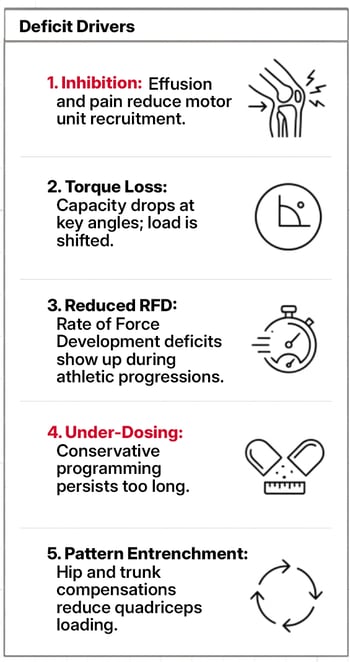 What’s driving the persistent deficit
Common contributors we see across cases include:
-
Ongoing inhibition from effusion and pain sensitivity that reduces motor unit recruitment during higher-effort work
-
Loss of torque capacity at key knee angles where athletes tend to protect the joint and shift load elsewhere
-
Reduced rate of force development that shows up once rehab moves from controlled strength into quicker athletic actions
-
Under-dosed quadriceps loading when programming stays conservative longer than the knee’s response allows
-
Compensation patterns (hip shift, trunk strategy, “stiffer” knee mechanics) that let the athlete complete tasks while avoiding quad demand
Why symmetry matters clinically
Quadriceps symmetry gives you a practical signal for readiness. When the involved side contributes less, athletes often solve tasks by changing strategy. Over time, that can limit training quality, slow the return of deceleration capacity, and increase fatigue costs during single-leg work. When symmetry improves, you typically see cleaner mechanics, more consistent tolerance to progressive loading, and better transfer into running, cutting preparation, and return-to-sport training.
- The athlete “finds” depth by shifting to the uninvolved leg
- Single-leg tasks look controlled early, then break down under fatigue
- Deceleration drills feel heavy, noisy, or inconsistent on the involved side
- Confidence stays low even when general strength is improving
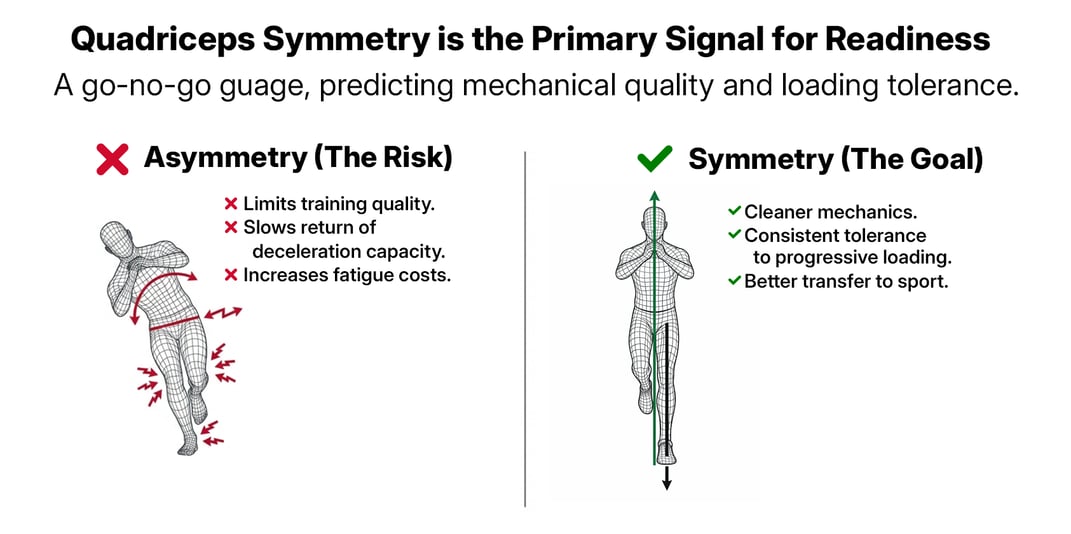
The next step is choosing a testing approach you can repeat. When you measure quad output the same way over time, you gain a clearer signal for progression decisions and programming changes — without needing isokinetic testing.
A practical quad testing ladder for real-world clinics
You don’t need isokinetic equipment to track quadriceps recovery with purpose. You do need a method that you can repeat, document, and explain to an athlete and the wider care team. When your setup stays consistent, your numbers become a useful signal for programming and progression decisions. Choose the highest tier on the testing ladder you can standardize:
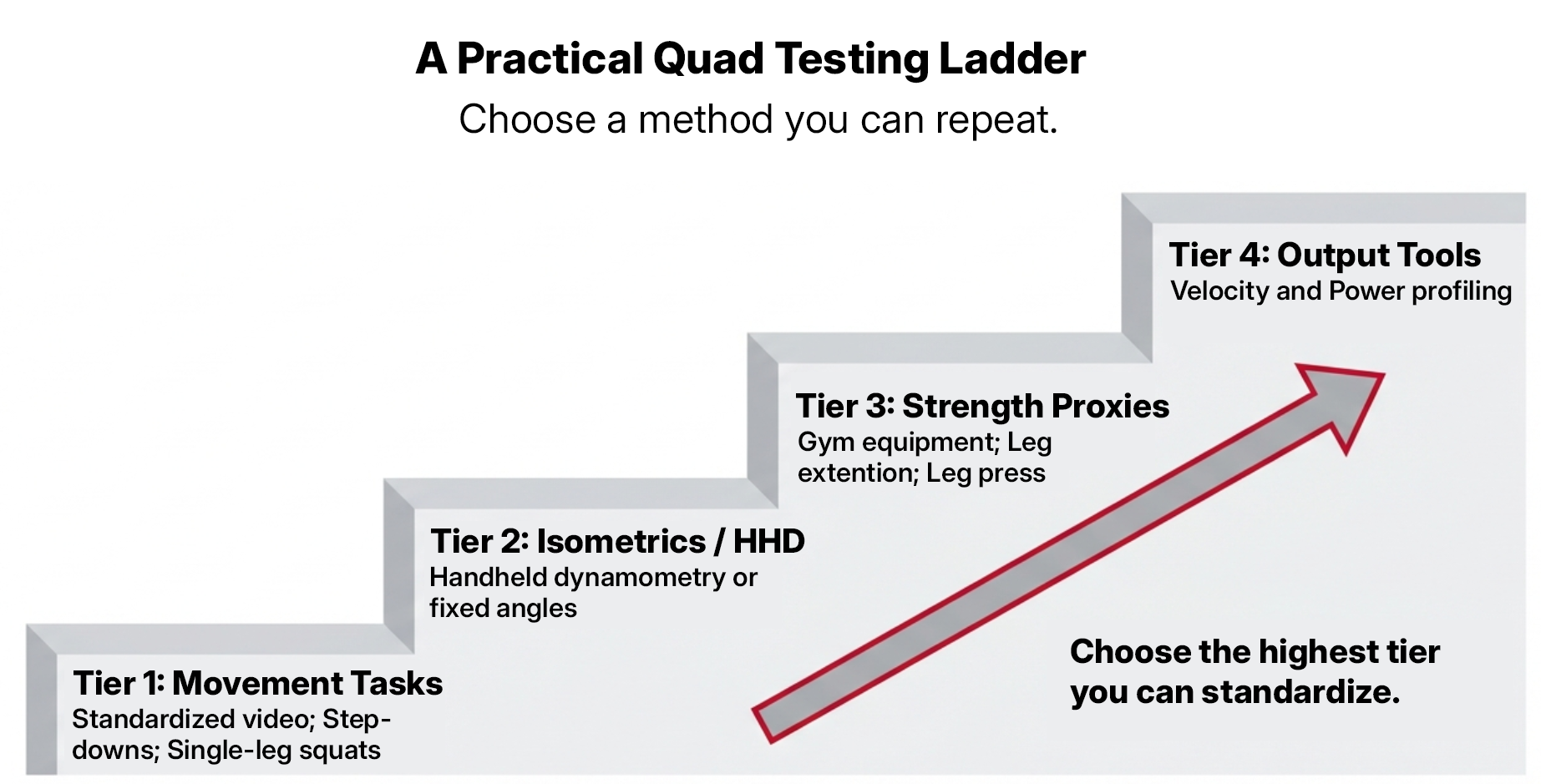
Tier 1: Standardized movement tasks + video
Use this tier when you need a fast screen that still improves repeatability.
Good fits
-
Step-down variations
-
Single-leg squat to a target
-
Sit-to-stand from a fixed height
How to standardize
-
Keep the same target height, stance width, and foot position each time
-
Film from the same angle and distance
-
Use the same cue set (depth, control, tempo)
-
Add a simple fatigue context when appropriate (example: after a set volume of step-downs)
What you document
-
Depth and control across reps
-
Compensations you saw in ACL Prehab (shift, trunk strategy, stiff knee pattern)
-
Athlete report: confidence and symptom response over the next 24 hours
Tier 2: Handheld dynamometry (HHD) or fixed isometric setups
Use this tier when you want a clearer strength signal without a lab.
Setups that tend to hold up well
-
Seated knee extension isometric at a fixed knee angle
-
Prone or seated positions where you can stabilize pelvis and thigh
-
Strap-assisted handheld dynamometer (HHD) when available to improve consistency
How to standardize
-
Pick one knee angle and keep it consistent (document it)
-
Stabilize the athlete the same way each time (belt/strap, bench setup, clinician position)
-
Use a consistent effort instruction: “build to max over 2 seconds, hold 3 seconds”
-
Record best of 3 with full rest between efforts
What you document
-
Peak force (or torque estimate if your setup supports it)
-
Side-to-side comparison
-
Notes on pain, effort quality, and position consistency
Tier 3: Strength proxies using common gym equipment
Use this tier when you have access to machines or consistent resistance tools and you need a practical trend line.
Examples
-
Leg extension through a consistent range
-
Leg press with consistent foot position and depth
-
Split squat or rear-foot elevated split squat with controlled tempo
How to standardize
-
Lock in the setup details: seat position, back angle, foot placement, range markers
-
Use the same rep scheme (example: 5RM, 8RM, or a fixed load for max reps with form rules)
-
Keep tempo consistent and stop sets when mechanics change
-
Retest under the same conditions (time of day, warm-up, rest intervals)
What you document
-
Load and reps completed with quality
-
Range of motion achieved
-
Knee response the next day (effusion, soreness, stiffness)
Tier 4: Output and velocity metrics when you have access to tools
Use this tier when you want to track how the quadriceps performs across different speeds and loads.
Where this helps
-
You can see how an athlete produces output at slower and faster efforts
-
You can guide progressions toward power and sport-relevant demands with clearer targets
How to standardize
-
Use a consistent protocol (loads, reps, rest)
-
Capture the same variables each time (output, velocity, effort notes)
-
Retest on a predictable schedule so trends remain meaningful
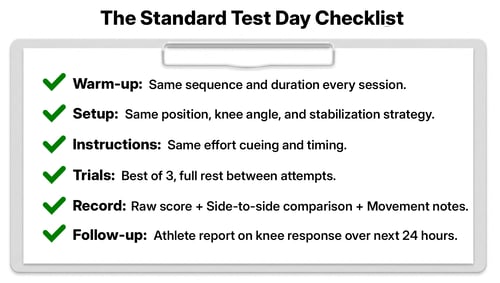 The “standard test day” checklist
-
Warm-up: same sequence and duration each session
-
Setup: same position, same knee angle, same stabilization strategy
-
Instructions: same effort cueing and timing
-
Trials: best of 3, full rest between attempts
-
Record: raw score, side-to-side comparison, movement notes
-
Follow-up: athlete-reported knee response over 24 hours
Once you pick a tier, your next step is interpretation. We want to understand what the asymmetry means for progression today, and what changes when the athlete adds fatigue, speed, and higher-demand tasks.
How to interpret quad asymmetry and use it for progression decisions
Once you have a repeatable test, interpretation becomes straightforward. We want your results to answer two clinic questions: Can this athlete tolerate the next loading step? and What should we adjust to keep progress moving? You’ll get better decisions when you pair the number with context from the session and the knee’s response over the next day.
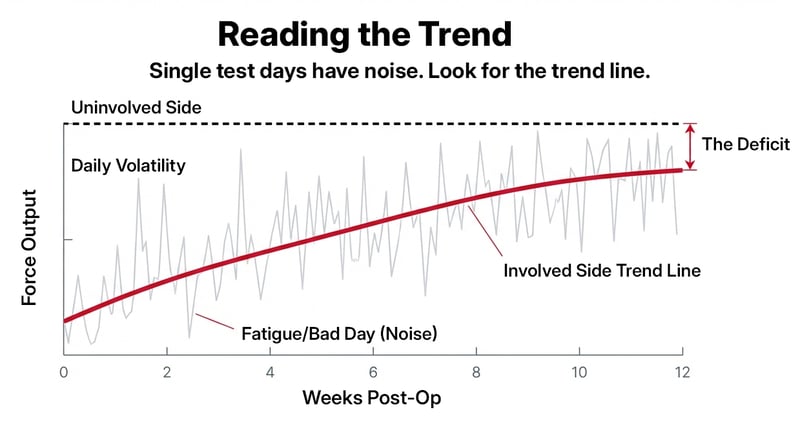
Step 1: Treat each result as a trend line
Single test days can overstate change. Fatigue, sleep, pain sensitivity, and setup consistency all influence output.
How we keep it useful
-
Retest on a predictable rhythm (every 2–4 weeks works well for most settings)
-
Keep your tier and setup identical each time
-
Track the best score and the average across trials so you can see stability
What you’re looking for
-
A steady upward trend on the involved side
-
Narrowing side-to-side gap over time
-
Fewer “good day / bad day” swings as tolerance improves
Step 2: Add clinical context that protects decision quality
A symmetry number matters most when it aligns with what you see during unilateral work.
Pair the score with these quick notes
-
Movement strategy during your ACL Prehab tasks (shift, trunk strategy, knee stiffness)
-
Quality under fatigue during sets and later in the session
-
Athlete-reported confidence (simple 0–10 rating works well)
-
Session tolerance: pain during training and soreness pattern afterward
Step 3: Use a simple knee response check within 24 hours
The knee’s response tells you whether the current dose fits the athlete’s capacity.
Track two signals
-
Effusion: changes in swelling, stiffness, or “fullness” sensation
-
Function: stairs, sit-to-stand, and walking comfort the next day
How you apply it
-
If the knee returns to baseline by the next day, you have room to progress load or complexity
-
If the knee stays reactive into the next day, keep the same level and adjust volume before you add intensity
Step 4: Avoid common interpretation errors that slow progress
These show up often in clinic and they’re easy to catch when you document consistently.
Patterns to watch
-
Strong bilateral patterns with a persistent unilateral gap
-
Clean early reps followed by breakdown late in sets
-
A rising strength score with a persistent deceleration quality problem
-
Low confidence that limits intent and output during testing and training
When you see one of these patterns, your next step is programming adjustment. The goal is to raise quad contribution during the tasks that matter, while keeping the knee’s response stable.
Next, we’ll walk through practical ways to close the gap using dosing, unilateral bias, and progressions that match the athlete’s current tolerance and movement strategy.
Programming adjustments when quad symmetry lags
When your testing shows a persistent gap, your next step is simple: adjust the training inputs you control and keep the knee’s response stable. We want the involved side producing more meaningful work each week, with fewer compensations and a clearer transfer into running, deceleration, and change-of-direction preparation. Start with the levers that move outcomes fastest:
1) Increase exposure frequency for quad-specific work
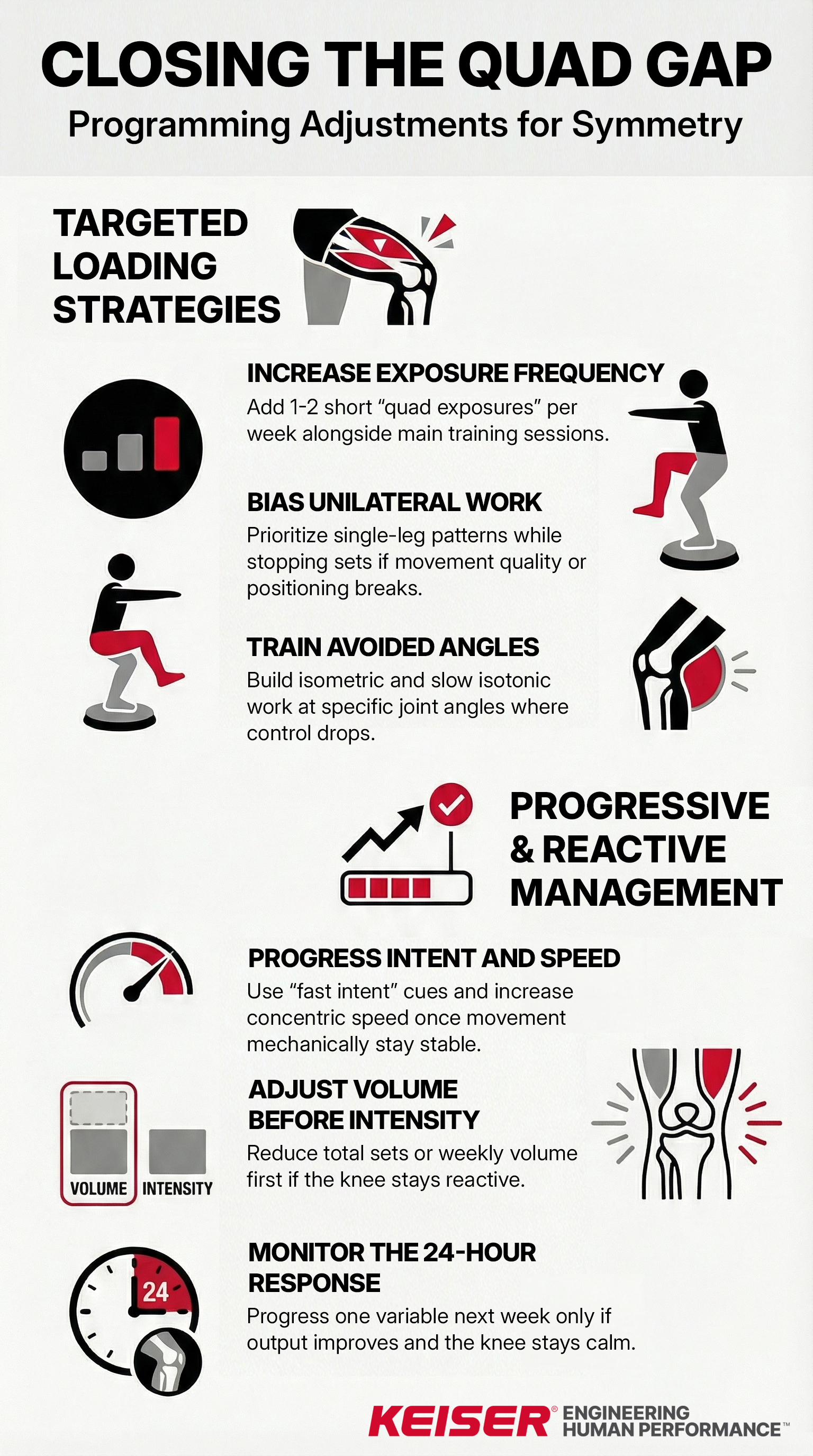 Many athletes need more consistent quad loading to regain output.
How you can apply it
-
Add 1–2 short “quad exposures” per week alongside main sessions
-
Keep the exposures low in complexity and easy to repeat
-
Use the same setup each time so the athlete can build intent and confidence
What you’re looking for
-
Improved output within the session
-
Less reliance on hip and trunk strategy in unilateral patterns
-
Stable knee response into the next day
2) Bias unilateral work while you protect movement quality
Unilateral loading helps you raise contribution from the involved side.
Progression rules that keep it clean
-
Pick 1–2 primary unilateral patterns and keep them for a block
-
Use a consistent tempo for early blocks so the athlete owns the range
-
Stop sets when the athlete loses position, shifts, or stiffens the knee strategy
-
Progress one variable at a time (load, range, speed, or volume)
Examples that work well
-
Split squat variations
-
Step-up and step-down progressions
-
Single-leg press or single-leg squat patterns to a target
3) Train the angles the athlete avoids
Strength gaps often persist at joint angles where athletes protect the knee.
How you can apply it
-
Identify the range where control drops or output falls
-
Build isometric and slow isotonic work at that angle
-
Expand range gradually while you keep symptoms calm
This approach builds tolerance where the athlete needs it most and improves carryover into deceleration tasks.
4) Progress intent and speed once control holds
As symmetry improves, your goal shifts toward producing force quickly and repeatedly.
How you can apply it
-
Use “fast intent” cues on controlled movements once mechanics stay stable
-
Add controlled concentric speed before you increase complexity
-
Keep deceleration and landing demands within the athlete’s current tolerance
What you document
-
Output quality across reps
-
Strategy changes under fatigue
-
Knee response into the next day
5) Adjust volume before you adjust intensity when the knee gets reactive
You can often restore tolerance by tightening dose while keeping meaningful work in the plan.
Practical adjustments
-
Reduce total sets or reduce total weekly volume
-
Keep 1–2 key movements that the athlete performs well
-
Remove late-session fatigue work for a week, then reintroduce gradually
-
Keep your test tier consistent so you can track the trend line
A quick decision guide (use with your testing trend)
-
If output improves and the knee stays calm: progress one variable next week
-
If output improves and movement quality breaks late in sets: keep load stable and tighten tempo, rest, and rep quality rules
-
If output stalls and the knee stays calm: add quad exposure frequency and increase targeted unilateral dose
-
If the knee stays reactive into the next day: reduce volume and rebuild tolerance before progressing demand
Once you close the gap and the athlete tolerates higher-demand work, symmetry becomes one part of a larger readiness picture. Next, we’ll place quad symmetry inside return-to-sport decision-making so your criteria stay consistent across the full progression.
Where quadriceps symmetry fits inside return-to-sport readiness
Quadriceps symmetry helps you judge how well an athlete can share load across limbs during higher-demand work. In return-to-sport planning, we use symmetry as a practical anchor for progression. When the involved side contributes consistently, you can build speed, deceleration, and change-of-direction work with fewer compensations and clearer dose control. Use symmetry to support three key readiness questions:
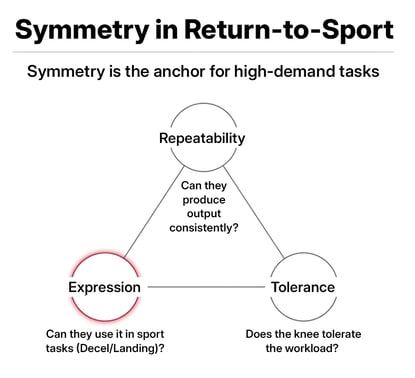 1) Can the athlete produce repeatable output on the involved side?
A single strong rep matters less than repeatability across a session and across weeks.
What we look for
-
Stable test results across trials
-
Consistent mechanics in unilateral strength patterns
-
Fewer strategy changes late in sets
This tells you the athlete can train with intent and accumulate productive volume.
2) Can the athlete express that output during sport-relevant tasks?
As rehab moves toward running, deceleration, and cutting preparation, the athlete needs to keep quad contribution while demands rise.
What you monitor
-
Deceleration quality during linear progressions
-
Control during single-leg landing and re-acceleration tasks
-
Tolerance to higher-velocity work across multiple exposures
When symmetry improves, these progressions tend to feel more stable and less costly from a fatigue standpoint.
3) Does the knee tolerate the workload required for the next phase?
Return-to-sport readiness depends on the athlete’s ability to handle training stress and recover well.
How you keep it clinician-friendly
-
Track knee response over 24 hours after higher-demand sessions
-
Watch for changes in effusion, stiffness, and functional comfort
-
Progress workload in planned steps so you can link cause and effect
This keeps your progression grounded in what the knee accepts, not what the calendar suggests.
How to use symmetry inside a broader RTS checklist
Symmetry works best when it sits beside other criteria you already track.
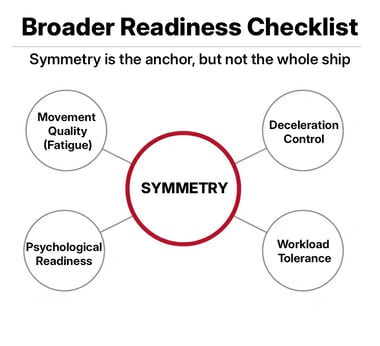 Include these alongside your quad measures
-
Movement quality in unilateral patterns under fatigue
-
Deceleration and landing control during linear-to-multidirectional progressions
-
Workload tolerance across the week (session-to-session consistency)
-
Athlete confidence and readiness to train with intent
When these pieces line up, you can move forward with clearer clinical reasoning and stronger communication across the care team.
Want the full phase-based readiness checklist?
The complete guide includes progression checkpoints, practical testing considerations, and return-to-sport criteria you can apply across phases.
GET THE ACL REHAB GUIDE
Includes a phase-based progression, criteria checkpoints, and a practical testing checklist for clinic use.
Learn More
FAQs: Quad symmetry and practical strength testing after ACL
1) What limb symmetry index (LSI) should we target for quadriceps strength after ACL?
Most clinicians use symmetry targets as part of a broader readiness picture. In practice, you’ll often see teams aim for high symmetry before full return to sport, then confirm the athlete can express that capacity during running, deceleration, and cutting progressions. Use your test method consistently so your LSI reflects a true change over time rather than day-to-day noise.
2) Can you make return-to-sport decisions without isokinetic testing?
Yes. You can make strong progression decisions when you use a repeatable testing approach, document setup, and track trends. Pair your strength result with unilateral movement quality, fatigue response, and knee response over the next 24 hours. This keeps your decisions defensible and easier to communicate across the care team.
3) What’s the most repeatable way to test quad strength in a typical clinic?
A fixed isometric setup tends to produce clean repeatability when you control knee angle, stabilization, and instructions. Handheld dynamometry can work well when you standardize position and use consistent cueing and rest. If you rely on gym-based proxies, document seat position, range, tempo, and stop rules so you can recreate the same test conditions.
4) How often should you re-test quadriceps strength and symmetry?
A 2–4 week rhythm works well for many clinics, especially once the athlete tolerates higher-effort strength work. Shorter intervals can help when you’re adjusting dose and want faster feedback. Longer intervals can fit later phases when training blocks run longer. Keep your schedule predictable so your trend line stays meaningful.
5) If quad symmetry improves but movement quality still breaks down, what should you change?
Start by tightening the rules that protect quality under fatigue. Keep unilateral patterns consistent for a block, limit compensations, and stop sets when mechanics change. Then build repeatability across the week by adding short exposures, improving rest, and progressing one variable at a time. You want the athlete to keep quad contribution as speed and complexity rise.
6) Does symmetry alone predict a safer return to sport?
Symmetry gives you a useful anchor for strength recovery, and it supports clearer progression decisions. Return-to-sport readiness also depends on workload tolerance, deceleration capacity, movement quality under fatigue, and athlete confidence. When you track these alongside symmetry, you get a clearer picture of readiness and a cleaner plan for the next progression step.
About the Author
 Manoj “Manny” Patel is a Consultant Chartered Physiotherapist for Keiser UK & Ireland and a Chartered Physiotherapist (MSc, BSc (Hons), DiP, MSCP, SRP). He has over two decades of experience across physiotherapy, health, and fitness, with clinical and performance experience spanning the NHS, military settings, sport, and private practice.
This article was adapted from Manny’s ACL Rehab practitioner guide.

© 2026 Keiser Corporation | 2470 S. Cherry Ave | Fresno CA 93706