Why Power Training Could Be the Missing Link in Fall Prevention

New research shows muscle power declines earlier and faster than strength, and predicts fall risk more strongly (Freitas, Cruz-Montecinos, Ratel, & Pinto, 2024). Here’s what every senior living leader should know.


Why Power Training Could Be the Missing Link in Fall Reduction

New research shows muscle power declines earlier and faster than strength, and predicts fall risk more strongly (Freitas, Cruz-Montecinos, Ratel, & Pinto, 2024).

Here’s what every senior living leader should know.


Most programs build strength.
Few build power. 

But power, the ability to move quickly with force, is what actually predicts fall risk.

As adults age, they naturally lose muscle mass and strength. Most communities address this with standard resistance training. But fewer recognize an earlier and faster decline: muscle power.

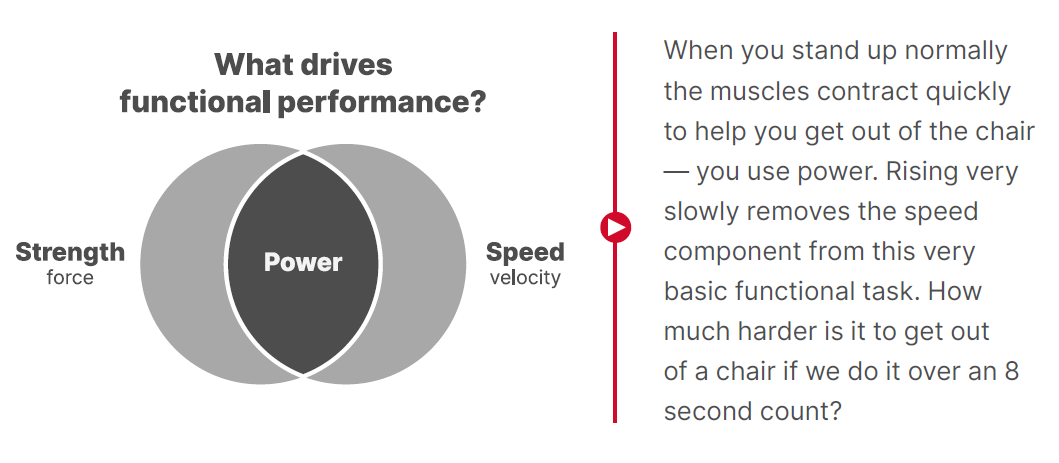
Power is strength applied at speed.

This condition is called powerpenia. Unlike sarcopenia (loss of mass) or dynapenia (loss of strength), powerpenia is still rarely addressed in most wellness programs.

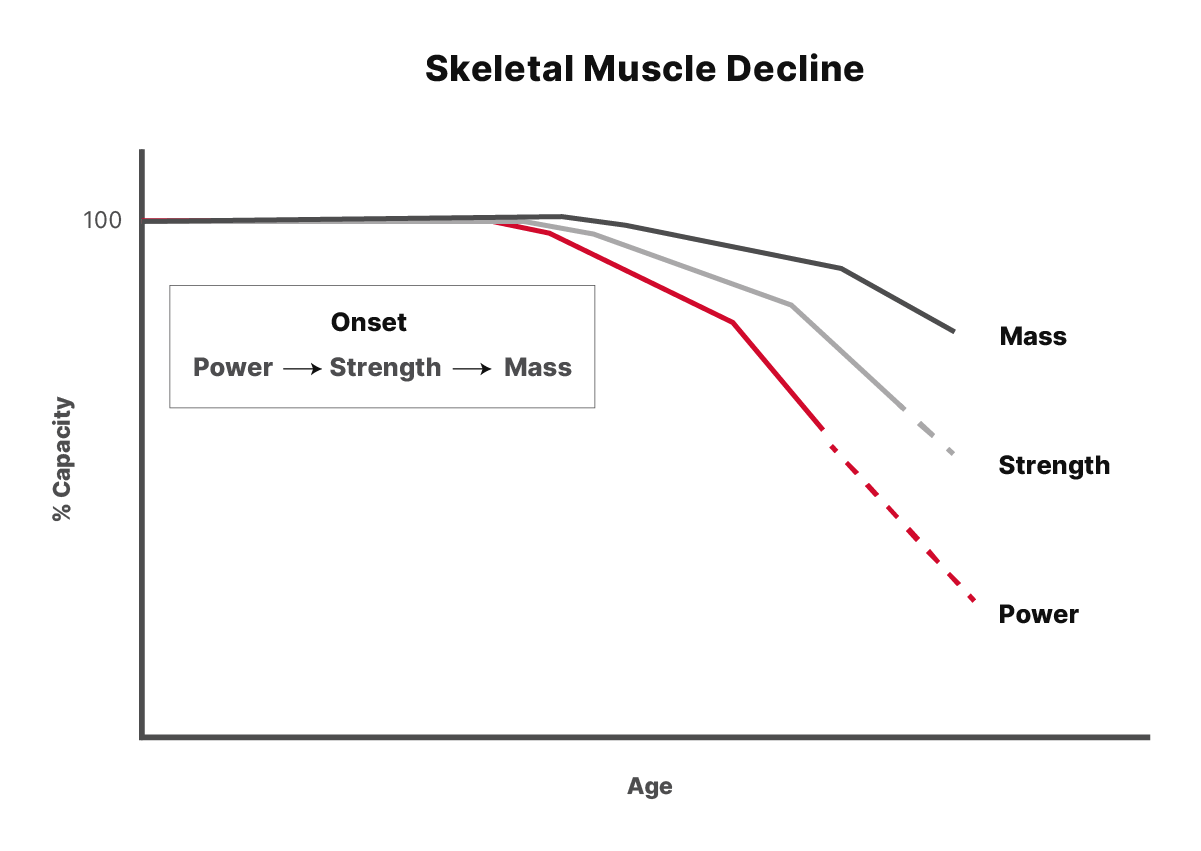
Skeletal Muscle Decline Graph

Power declines faster and earlier than strength. It’s more strongly associated with fall risk, reduced mobility, and loss of independence.

SPORTS MEDICINE-OPEN
2024

Strength alone isn’t enough

A resident might be able to press 100 pounds, but still fail to react quickly enough to catch themselves during a stumble. That’s not a strength issue. That’s a power issue — and it can be trained.

As Crystal Johnson, Keiser's STEP Director, describes it: "Power isn’t just strength. It’s strength expressed quickly. It’s what allows older adults to catch themselves, cross a street confidently, or rise from a chair without hesitation."

what-drives-functional-performance

Power training fills the missing gap

Most wellness efforts aim to preserve muscle mass. But it's power — strength combined with speed — that supports functional independence and prevents falls.

The overlooked “-penias”:
  • Sarcopenia: loss of muscle mass

  • Dynapenia: loss of strength

  • Powerpenia: the loss of muscular power, or strength times speed

If fall prevention is the goal, training for speed is just as important as training for strength. Residents need both the muscle to lift — and the reaction time to recover.

Losing Power and Strength

Watch Keiser Founder and CEO Dennis Keiser deliver an eye-opening demonstration on what it feels like to lose strength. And a powerful reminder of why losing power is even more dangerous.

Power declines earlier and faster than strength — making it a key predictor of falls.

JOURNAL OF CACHEXIA, SARCOPENIA AND MUSCLE
2025

The Financial Impact of Falls

Every year, falls drive higher medical costs, shorter resident stays, and lost revenue opportunities. Even the best wellness programs fall short if they don’t address the root cause.

The cost in dollars

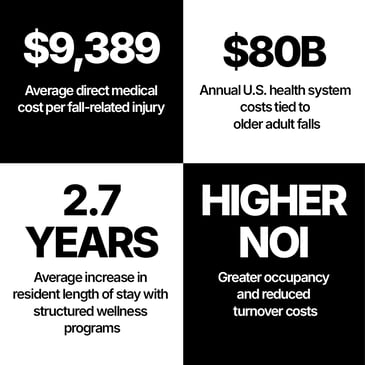
  • ~$9,389: Average direct medical cost per fall-related injury (Medicare data, 2007–2009; Hoffman et al., 2016 — not adjusted for inflation).
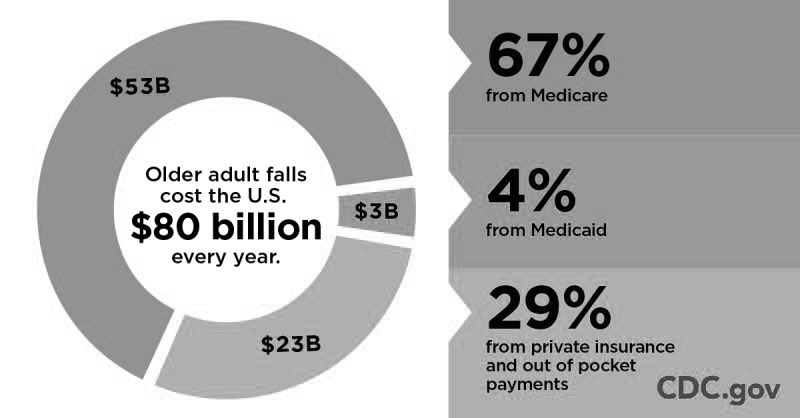
  • $80B annually: U.S. health system costs tied to falls among older adults
  • Falls increase hospitalizations, staff burden, and liability exposure
According to the CDC, older adult falls cost the U.S. $80B every year

The cost in operations

  • Residents who fall often transition to higher levels of care sooner
  • Length of stay drops, lowering total lifetime resident value
  • Reputation suffers when families associate communities with safety risks

The opportunity

Communities that adopt structured resistance and power training see measurable financial benefits:

  • Longer lengths of stay on average for residents in structured wellness programs
  • Higher NOI (Net Operating Income) through greater occupancy and reduced turnover costs
  • Lower healthcare expenses by reducing falls and maintaining independence

The bottom line

Investing in the right kind of fall prevention is more than a safety measure. It’s a direct driver of financial performance.


$9,389 average direct medical cost per fall-related injury. $80b annual US health system cost. 2.7 years average increase. Higher NOI
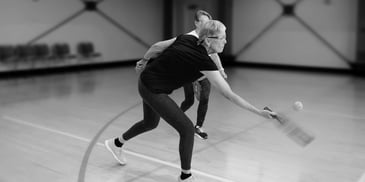
Bending the aging curve - two women playing pickleball

High-velocity resistance training, or power training, has been proposed as a more promising way to improve function and reduce falls in older adults than traditional resistance training.

BMC GERIATRICS
2025

How STEP by Keiser Delivers Results

Introducing STEP

The STEP Program is a structured model for bringing safe, effective power training into senior living. Built around Keiser’s low-inertia resistance equipment, it enables older adults to train both strength and speed — safely, measurably, and at any ability level.

Resident Impact

In a 12-week pilot, residents improved leg power, gait speed, and sit-to-stand performance — changes tied directly to reduced fall risk and greater independence. Participants reported higher confidence in daily life, from walking to playing pickleball, and 100% wanted to continue training after the program ended.

Staff & Program Impact

STEP gives wellness teams ready-to-use training protocols, resident engagement templates, and progress-tracking tools. Programs don’t stall when staff change. On-demand modules and built-in education keep teams confident and consistent.

Operator Impact

For operators, STEP aligns wellness with measurable business outcomes. Structured programming supports longer lengths of stay, stronger NOI, and a wellness brand that families notice when choosing where to live.


From Research to Results

In a 12-week pilot at River Landing, residents improved leg power, gait speed, and sit-to-stand speed — delivering functional gains with real-world significance.

  • +22% average increase in leg power
  • +11% increase in gait speed
  • +17% improvement in sit-to-stand speed
  • 1 resident reversed osteopenia after 12 weeks
  • 100% of participants wanted to continue after the pilot
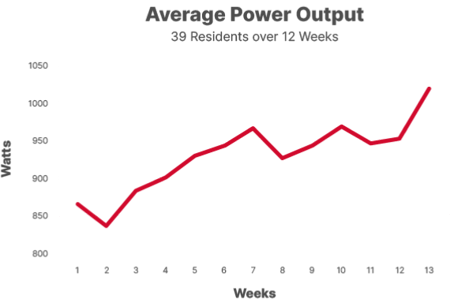
 

Chart-Power-12-Weeks
STEP Value Proposition

READY-TO-USE SLIDES FOR SENIOR LIVING LEADERS

Real-world data and resident success stories packaged in a customizable deck to strengthen your next boardroom conversation.

LEARN MORE
PROGRAM OVERVIEW
Watch an Overview of the STEP Program

A brief walkthrough of the 4 Pillars of STEP: advanced equipment and technology; staff education and support; exercise programs designed for results; and marketing and sales support.

We’ve had to add more classes — residents are lining up to participate. We’ve even had residents helping train new members.

RIVER LANDING WELLNESS STAFF

Real results, in real communities. 

When STEP is implemented, residents and staff notice the difference quickly. Confidence grows, participation rises, and communities see stronger engagement.


I am stronger and more powerful — and more confident.

STEP PARTICIPANT
River Landing


Hear from staff and residents about STEP

Residents regained independence. Staff saw the shift in real time. River Landing and Galloway Ridge reflect on what changed.


Keiser STEP Guide

Get the STEP Guide FREE!

Understand the fitness challenges of older adults and what your community can do to solve them.


Why Keiser makes training for power safer and more effective

Power training is only effective if it’s safe, trackable, and easy to use. Keiser’s Pure Resistance Technology™ and senior-friendly design make it possible to train for strength and speed — at any age, and any ability level.

  • Low-inertia resistance reduces joint strain and allows movement at any speed
  • Push-button resistance control is easy to adjust in 1-pound increments
  • Digital display shows power and progress in real time — boosting confidence
  • Smooth, quiet operation supports unsupervised use and reduces intimidation
  • Ergonomic design accommodates diverse body types and mobility levels
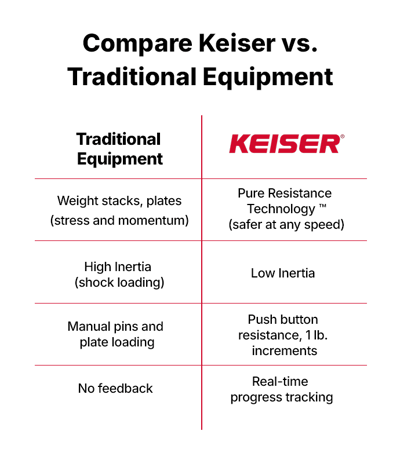
Keiser vs. Traditional Resistance Equipment chart
icon-demo-van-100

TRY OUR EQUIPMENT. WE'LL BRING IT TO YOU.

Our mobile showroom will bring the equipment to you. 

LEARN MORE

A Program That Fits Your Community

From compact rooms to full wellness centers, STEP is built to fit your community, and comes with everything you need to succeed.

  • Flexible facility options: Whether you’re converting a small room or designing a full wellness studio, STEP adapts to your footprint. Our design team provides 3D previews, Gym Builder tools, and architect-ready files.
  • Staff-ready programs: On-demand education, simple protocols, and coaching support ensure your staff can lead with confidence — even through turnover.
  • Built-in engagement tools: Professionally designed marketing kits, resident tracking templates, and achievement certificates make it easy to spark participation and keep it growing.
  • Sustainable support: Keiser doesn’t disappear after install. With ongoing resources, check-ins, and educational content, we help your program thrive long-term.
STEP - Stronger Together Empowering Performance
Keiser and community wellness staff with a resident on a Keiser Lefg Press

Compact Space

(6–8 pieces, efficient footprint)

Mid-Size Studio

(9-pieces for more variety and capacity)

Full-Scale Space

(dedicated wellness space)

Hear from a team that's experienced Keiser

Vista Del Monte has used Keiser equipment for two decades. When it came time to upgrade, they never looked elsewhere.

What do we need in order to become a tier-one community?
And I would say Keiser Fits into that.

DOUGLAS TUCKER
Executive Director, Vista del Monte

Head-Crystal-JohnsonAsk our expert in the older adult market

Questions? Crystal understands the needs of older adult communities like yours.



Citations

  • Freitas, S. R., Cruz-Montecinos, C., Ratel, S., & Pinto, R. S. (2024). Powerpenia should be considered a biomarker of healthy aging. Sports Medicine – Open, 10(27). https://doi.org/10.1186/s40798-024-00689-6
  • Tøien, T., Berg, O. K., Modena, R., Brobakken, M. F., & Wang, E. (2025). Heavy strength training in older adults: Implications for health, disease and physical performance. Journal of Cachexia, Sarcopenia and Muscle, 16(2), e13804. https://doi.org/10.1002/jcsm.13804
  • Hoffman, G. J., Hays, R. D., Shapiro, M. F., Wallace, S. P., & Ettner, S. L. (2016). The costs of fall-related injuries among older adults: Annual per-faller, service component, and patient out-of-pocket costs. Health Services Research, 52(5), 1794–1816. https://doi.org/10.1111/1475-6773.12554
  • Zhu, Y., et al. (2025). Association of lower-limb strength with different fall histories and prospective falls in community-dwelling older adults: a prospective cohort study. BMC Geriatrics, 25(1): 56. https://doi.org/10.1186/s12877-025-05685-3
Return to top