Episode 40
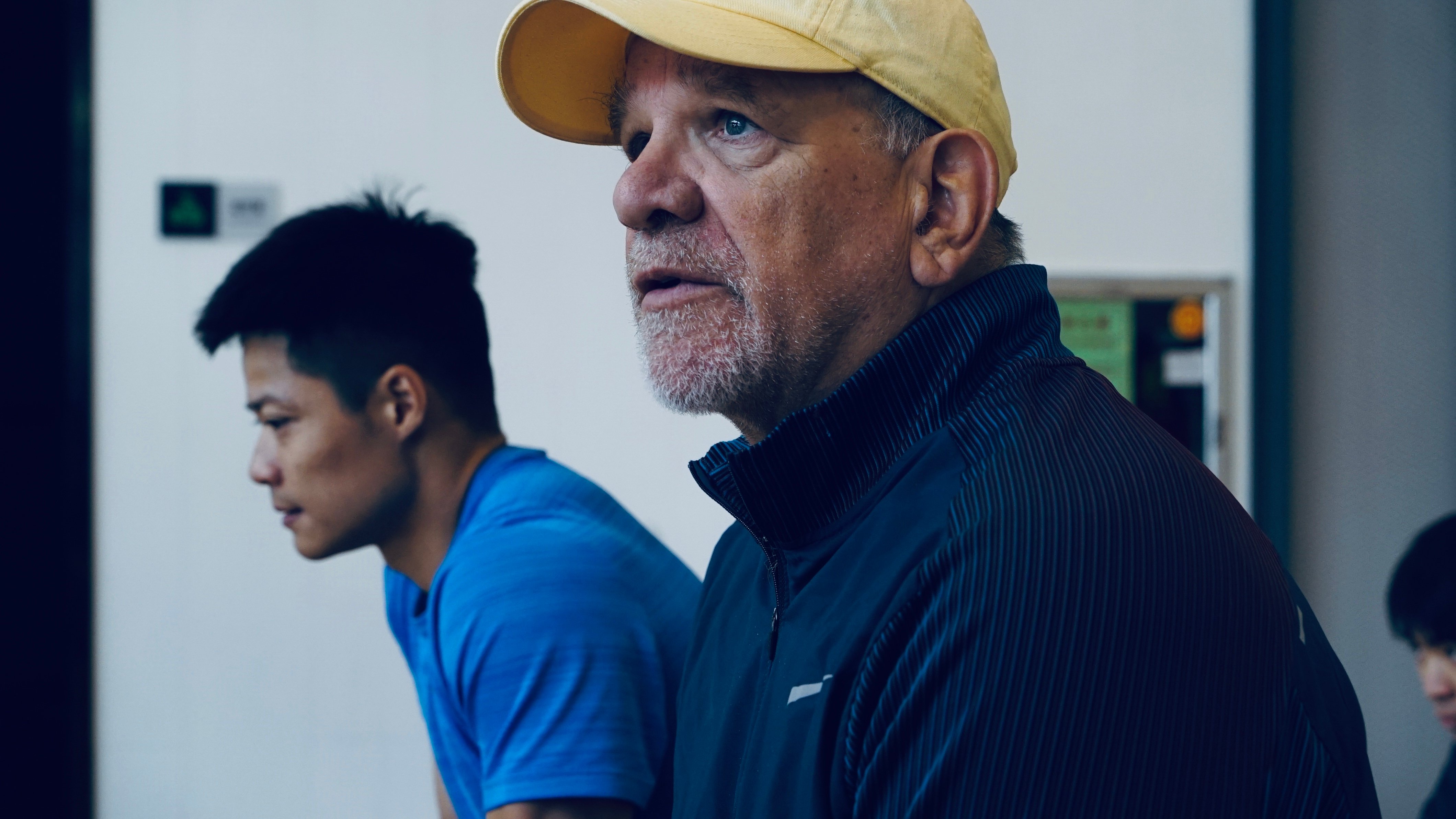
Randy Huntington: Keiser Seated Calf
Listen to the full podcast episode below, or listen on your favorite player.

Watch or listen on your favorite platforms







In this conversation, Gabe Derman sits down with legendary performance coach Randy Huntington to discuss one of the most overlooked drivers of athletic performance: the calf complex. Drawing from more than 43 years of coaching experience with world-class athletes including Willie Banks, Mike Powell, and Su Bingtian, Randy shares how his understanding of lower-leg function evolved throughout his career and why he believes the plantarflexors play a critical role in speed, acceleration, force production, and athletic performance.
The discussion explores the neuromuscular demands of elite sprinting, the role of the soleus and calf musculature in acceleration, and how Randy integrated the Keiser Seated Calf Press into his training systems. He explains what makes pneumatic resistance unique, how it allows athletes to train with greater intent and velocity, and why targeted calf development can influence performance across a wide range of sports.
The conversation also examines how calf training impacts stiffness, reactivity, and force production, along with Randy's thoughts on the future of speed development and lower-leg training. Coaches, athletes, and performance professionals will walk away with a deeper appreciation for an area of training that is often overlooked but may have tremendous influence on performance outcomes.
00:00:00.120 --> 00:00:05.020
All right, Randy Huntington. How are you, my friend? Good. It's a nice sunny morning here in Idaho. I'm liking
00:00:05.060 --> 00:00:09.680
it. Love to hear it. So last time we spoke, Randy, you, mentioned that you were working on becoming semi-retired.
00:00:09.720 --> 00:00:14.000
I've come to learn again that you're still working on being semi-retired. Yeah. So you're staying busy. What, what's
00:00:14.100 --> 00:00:14.200
new
00:00:14.220 --> 00:00:15.840
in your world? Well,
00:00:16.120 --> 00:00:19.320
I mean, you know, outside of Christian McCaffrey, and Luke,
00:00:19.640 --> 00:00:20.380
and, and Bijan
00:00:20.700 --> 00:00:22.060
for the, the last year, and
00:00:22.660 --> 00:00:28.340
not so much with Bijan. He comes in on occasion 'cause he's just... He's, he's, he's there. He's in Atlanta,
00:00:28.380 --> 00:00:32.040
and it's hard. But he comes in for a little refresher once in a while. And I
00:00:32.060 --> 00:00:34.020
think that what's important is for, you
00:00:34.060 --> 00:00:35.080
know, when you get these
00:00:35.440 --> 00:00:36.900
private, private coaches,
00:00:37.040 --> 00:00:41.100
you know, claiming my guys. You know, it's real easy to say my guys, but the really, the real
00:00:41.180 --> 00:00:46.260
issue is that these are the 49ers, and the Falcons, and the Commanders guys, and we are just along for
00:00:46.320 --> 00:00:51.620
the ride to get them ready for them. You know, it's important to always remember that, you know, with Shanahan,
00:00:51.680 --> 00:00:57.570
and Bobby, and both Dustin's taking care of business at the 49ers, it' really, really is that the real team,
00:00:57.640 --> 00:01:00.280
the thing that makes things happen for, like, Christian for instance,
00:01:00.340 --> 00:01:05.900
and for Luke, his people, and obviously a new coach in Atlanta for Bijan. So there's a whole lot of
00:01:05.940 --> 00:01:12.140
different things happening there. So it's fun. It's great to see these guys excel, you know, to work through the
00:01:12.220 --> 00:01:13.000
things that happen in
00:01:13.020 --> 00:01:17.960
football because it's a, it's a rough, rough game. My gosh, you know, you kinda forget. It's
00:01:18.000 --> 00:01:22.420
been a few years since I'd worked in it, since I worked with, uh, Christian's dad, with Eddie many, many
00:01:22.440 --> 00:01:26.540
years ago, 20, 27 years ago now. Yeah, to see them excel and then literally to help them- Yeah ...
00:01:26.600 --> 00:01:31.540
accelerate. Yeah. Yeah. And I was in, and I've been in China back and forth since we talked last too.
00:01:31.660 --> 00:01:35.990
So last year I w- went back to China for a bit to help with one of the province's jumpers,
00:01:36.060 --> 00:01:41.080
and they, they won their golds at their national games, which was what their goal was. And so that
00:01:41.120 --> 00:01:45.040
was, that was fun. You know, fun to see them do their thing. Will I go back to China?
00:01:45.360 --> 00:01:45.510
Don't
00:01:45.540 --> 00:01:49.300
know, you know. So when we think about, you know, semi-retired, we're gonna put the emphasis
00:01:49.340 --> 00:01:52.010
on the semi. Yeah. It's not as, it's, it's
00:01:52.080 --> 00:01:56.100
not like it... I guess it. would be like a semi-boneless ham. You know, it's still ham.
00:01:56.440 --> 00:02:00.960
There's still a bone, but it. just, you just keep getting pulled, and, you know, for me,
00:02:01.040 --> 00:02:04.900
the hard part is some of the guys I was working with are still competing, and,
00:02:05.080 --> 00:02:06.080
you know, it's hard
00:02:06.140 --> 00:02:07.030
to, it's hard
00:02:07.080 --> 00:02:11.930
to watch them fail when you- I appreciate it. Yeah. And, and, and really, you know, exciting to hear that,
00:02:11.960 --> 00:02:16.420
you know, you're obviously still involved. Obviously you had a, an amazing impact on so many people and, and so
00:02:16.480 --> 00:02:19.920
many athletes in the world of performance. So, you know, as long as we can keep you in it, I
00:02:19.960 --> 00:02:22.400
know we're all grateful. And before we get into
00:02:22.800 --> 00:02:24.040
this discussion related to,
00:02:24.460 --> 00:02:28.020
you know, the Keiser Seated Calf specifically, I'd love to start with maybe a bigger picture. We'll zoom out
00:02:28.060 --> 00:02:32.280
a little bit. You've coached for more than four decades some of the greatest speed and power athletes
00:02:32.640 --> 00:02:38.980
ever. Looking back, at what, point in your coaching career did you begin to realize that the, calf complex
00:02:39.000 --> 00:02:41.100
might be a bigger performance driver
00:02:41.200 --> 00:02:43.900
than maybe what most of us really appreciate?
00:02:44.040 --> 00:02:48.080
I think it's ... You know, I, I, I thought about this the other day, and I think it really
00:02:48.120 --> 00:02:53.260
goes back to, fundamentally goes back to a conversation I was having with Coach Robin Pound.
00:02:53.680 --> 00:02:55.980
It wasn't really a conversation. It was a little more of a heated
00:02:56.020 --> 00:02:58.980
discussion at the time. But not that heated. I mean, it was just.
00:02:59.040 --> 00:03:03.960
a fun, fun thing. Robin and I were contemporaries. She's a few years younger than me. But he, we went
00:03:03.970 --> 00:03:10.940
to school together. And Robin had contended that the calf... And he' was thinking, at that particular time, gastrocs. And
00:03:11.160 --> 00:03:16.070
I was thinking, yes, gastrocs were important, but the soleus was import- but,
00:03:16.490 --> 00:03:20.240
but, but the force you were applying to those was the first part of the equation.
00:03:20.660 --> 00:03:24.100
Of course, it, it' ends up being that that's the second part of the equation really. But
00:03:24.140 --> 00:03:30.380
that was kind of where it started. That was 1984 or '85, somewhere in there, you know. And then to
00:03:30.440 --> 00:03:31.900
take that further, I think that,
00:03:32.040 --> 00:03:32.080
you
00:03:32.120 --> 00:03:36.970
know, p- you, you, you were, you were asking me a little bit about when I came across the Seated
00:03:37.060 --> 00:03:38.980
Calf. And, you know, Dennis designed it
00:03:39.040 --> 00:03:40.300
for Willie Banks,
00:03:40.500 --> 00:03:43.060
so we were, we were user one for
00:03:43.100 --> 00:03:48.000
the Seated Calf, and, uh, we started using it in 1987 at UCLA. To put it in
00:03:48.040 --> 00:03:54.800
at UCLA, John Arce and Bobby Alejo were there, and Bobby Kersee, John Smith, all those guys. were, were still...
00:03:54.840 --> 00:03:59.920
They weren't using that w- w- that much, but Florence and, and Jackie were, and so they were utilizing it'
00:03:59.960 --> 00:04:00.160
early
00:04:00.220 --> 00:04:04.910
on as well, so. But it was designed for Willie, for Willie Banks. Right. So was there something there with
00:04:04.940 --> 00:04:09.840
the discussion of, hey, there's something that Willie is missing, or there's a missing piece of the puzzle here that
00:04:09.880 --> 00:04:14.300
we are not achieving through what is currently available that we need to address, so now, we need to design
00:04:14.380 --> 00:04:15.380
something- That- ... to accomplish
00:04:15.420 --> 00:04:22.200
that? At, that point, this thing was designed for, Willie's injury to help him rehab and work on his Achilles.
00:04:22.260 --> 00:04:24.240
And, you know, I had used the Seated Calf
00:04:24.920 --> 00:04:27.940
mass-based for a few years before that, and I could feel
00:04:28.000 --> 00:04:28.980
the difference. Uh,
00:04:29.080 --> 00:04:34.460
and I could see what was happening, why we needed to have this, that, you know, the fact that the
00:04:34.500 --> 00:04:39.920
soleus is the platform, the gastrocs are the active mover, and the soleus sets up the gas- set- sets up
00:04:40.000 --> 00:04:42.060
the gastroc. So the soleus is the
00:04:42.120 --> 00:04:45.200
stiffness, and the gastroc is the elasticity, if you wish.
00:04:45.620 --> 00:04:49.960
You can think of it' that way. And, and that was, that was where my head was going when,
00:04:50.200 --> 00:04:54.080
when w- And then when I got on the Seated Calf the first time, it' was like, "Yeah, okay.
00:04:54.520 --> 00:04:55.080
This gets it.
00:04:55.300 --> 00:04:59.140
Now, we're, now..." And, and, and the very first time anybody gets on it, and I'm sure you have experienced
00:04:59.180 --> 00:05:03.100
this, you, you get. that shaky calf, you know, th- that shaky motion, and,
00:05:03.660 --> 00:05:03.690
you
00:05:03.700 --> 00:05:06.110
know, it, it, it' was like, "Well, what's, what's wrong
00:05:06.180 --> 00:05:11.220
with, me," you know, kind of thing. That's what everybody asks. And not realizing that, you know, you're, you basically
00:05:11.240 --> 00:05:12.060
are set up
00:05:12.140 --> 00:05:19.070
to utilize everything in, the, your oral bi- is gravity-based, and those are your muscles firing in that sequence. It's
00:05:19.070 --> 00:05:19.980
sequencing and crap
00:05:20.040 --> 00:05:25.100
for, for 9.8 meters per second, per second. So that was... It took me a few minutes to
00:05:25.140 --> 00:05:30.060
figure out. It l- I' literally sat there that day, you know, why am I shaking, and came, figured out
00:05:30.120 --> 00:05:34.870
that it was because that's the rate my muscles were firing at, and they, didn't know, enough that the system
00:05:34.870 --> 00:05:40.880
was so fast that it' was catching it' in between firing. So it' was moving faster than my firing sequence
00:05:41.020 --> 00:05:43.280
and, and, that was a, that was an eye-opener
00:05:43.520 --> 00:05:48.300
right then, you know, that opened my eyes to, everything that, Keiser was doing 'cause I had used Keiser at
00:05:48.360 --> 00:05:52.000
Cal for... Put it, in at Cal in 1985 it
00:05:52.060 --> 00:05:55.900
was. So I had a sense of it, but not the se- not the calf. So take us to
00:05:56.060 --> 00:06:00.840
that, that, that Willie injury, that Achilles injury. Was it a tendinopathy? Was it a specific... Excuse me. I don't,
00:06:01.000 --> 00:06:01.960
I don't know. Was it a,
00:06:02.100 --> 00:06:05.160
uh- You know, that was the- ... a rupture? Well, it ended up being a rupture.
00:06:05.400 --> 00:06:06.039
That, that
00:06:06.140 --> 00:06:12.176
injury mostly came from-The shoes back in that, in those days, the heel cup, the heel counter,
00:06:12.276 --> 00:06:19.236
heel cup would dig, and whenever they'd go into full extension of the ankle, that heel counter would move into
00:06:19.256 --> 00:06:19.996
the Achilles. It was
00:06:20.056 --> 00:06:21.876
very sharp and very hard,
00:06:22.036 --> 00:06:26.816
and that was the, that was the main reason for a lot of Achilles issues back then. And do you
00:06:26.876 --> 00:06:31.456
recall Willie's first time being on it, maybe what his reaction was, right? You got on it, and you felt
00:06:31.466 --> 00:06:32.196
that.
00:06:32.256 --> 00:06:34.076
For Willie, nursing an injury- I don't-
00:06:34.316 --> 00:06:38.176
... dealing with an injury. Yeah ... you know, I, I don't recall. Well, he was s- he was already
00:06:38.316 --> 00:06:41.336
fairly recovered at that particular point, so we' used it.
00:06:42.416 --> 00:06:42.636
Yeah. Right.
00:06:43.616 --> 00:06:46.116
Later, like an- a year, almost a year later.
00:06:46.536 --> 00:06:46.696
Yeah.
00:06:47.396 --> 00:06:50.886
And, and then had surgery to repair it. But, you know, all we know,
00:06:51.096 --> 00:06:55.076
and all I can tell you is that during that year, we were able to get Willie to the point
00:06:55.116 --> 00:06:58.076
where he could land in his, in, in, in his hop and
00:06:58.116 --> 00:06:58.556
his step
00:06:59.196 --> 00:06:59.936
w- with a, with a
00:07:00.096 --> 00:07:06.016
almost a, a ball-of-the-foot landing, that he was gotten so strong that he wasn't dropping as much, and he wasn't
00:07:06.036 --> 00:07:11.356
absorbing as much, and that was the key. The key to being able to maintain his horizontal velocity
00:07:11.376 --> 00:07:15.156
through the jump was not absorbing, you know, we call them power leaks these
00:07:15.176 --> 00:07:20.886
days, absorption back then. But he was not absorbing. He was carrying his s- speed through and carrying the f-
00:07:21.116 --> 00:07:23.136
the, the force and the velocity through, and it was,
00:07:23.376 --> 00:07:28.436
that was key. You know, getting him to be able to not absorb all of that in the foot to
00:07:28.456 --> 00:07:32.096
begin with, and then the knee went, and then the hip went, and it just followed. So that, that
00:07:32.196 --> 00:07:36.956
foot set up the absorption of everything else, all the, the joints above it. Right. So it sounds like this
00:07:37.016 --> 00:07:38.056
calf press, once you were able to get on
00:07:38.076 --> 00:07:42.116
the Seated Calf, kind of became this eye-opener, right? You had the chance to experience it. You felt
00:07:42.156 --> 00:07:44.036
the shakiness. Then I imagine you
00:07:44.076 --> 00:07:49.616
started to think, "Okay, like, where does this fit into my training? Where do, where..." You know. Well, it fit
00:07:49.696 --> 00:07:50.036
in immediately. How
00:07:50.096 --> 00:07:50.756
do I integrate...
00:07:51.356 --> 00:07:55.046
Right. How do I integrate this with what I'm doing, you know? I'm just curious to hear
00:07:55.076 --> 00:07:59.046
your thought process and how that evolved from your first time getting on that through, like-
00:07:59.626 --> 00:07:59.626
It,
00:07:59.626 --> 00:08:03.336
there- ... "Okay" ... there wasn't- "This needs to be a part of it." It wasn't as complicated as that.
00:08:03.436 --> 00:08:03.846
It was,
00:08:04.036 --> 00:08:08.816
we need this, you know, obviously, 'cause it was him and Mike Powell and Al Joyner and Gordon Lane. All
00:08:08.876 --> 00:08:11.016
four of them were, were, were with me at that point.
00:08:11.196 --> 00:08:12.036
And, um, it,
00:08:12.516 --> 00:08:17.836
it, it became apparent to me pretty quickly what it was gonna do in terms of giving me ankle
00:08:18.095 --> 00:08:19.076
stability, ankle
00:08:19.315 --> 00:08:24.096
stiffness, you know, losing the power leaks in the, in the ankle. Whether it was in hurdling for Al
00:08:24.136 --> 00:08:29.126
or triple jumping for Al and Willie or long jumping for Gordon and Mike, you know, it, it... At
00:08:29.156 --> 00:08:31.385
first I was thinking it was gonna help with
00:08:31.416 --> 00:08:36.876
the takeoff, and then I realized, no, it's really helping more in the sprints, and 'cause the takeoff's flat-footed, we
00:08:36.895 --> 00:08:41.836
weren't, we, it didn't really help as much there. But it helped us in everything up until that point. So
00:08:41.895 --> 00:08:46.946
it was a, it was a, a milestone piece of equipment in my view. You know, and that was 40
00:08:46.956 --> 00:08:50.856
years ago almost, 39 years ago now. It's hard to believe. Yeah, I was gonna say, I mean, y-
00:08:51.076 --> 00:08:54.096
you are one of the most qualified Keiser historians out
00:08:54.136 --> 00:08:59.116
there. So- There's a, there's a few of us. N- there's a few of us. There's a few, a guy,
00:08:59.216 --> 00:09:01.036
other... Some of them are gone now. Yeah,
00:09:01.076 --> 00:09:02.016
I mean, I've, I'm
00:09:02.056 --> 00:09:02.116
in
00:09:02.156 --> 00:09:05.076
my f- 43rd year of using Keiser. Doesn't
00:09:05.136 --> 00:09:10.966
seem possible. 44 y- 44 years. Yeah. So as you've thought about, let's j- let's just kind of exclude Keiser
00:09:10.976 --> 00:09:15.716
here for a second, but w- in terms of the neuromuscular role that the calf complex plays, right, in track
00:09:15.756 --> 00:09:17.385
and field, in some of these events,
00:09:17.776 --> 00:09:23.506
long jump, triple jump, sprint, where do you see its biggest contribution? Before you had mentioned kind of this absorption
00:09:23.506 --> 00:09:30.105
phase or, or during power leaks. You notice now, during sprinting and not necessarily takeoff. Like, to you, where does
00:09:30.136 --> 00:09:34.076
this play the biggest role? And we' can break that down into different events even if you' want
00:09:34.116 --> 00:09:38.986
to. Yeah. Well, I think it plays two roles, but the first one is in acceleration. You know, when
00:09:39.016 --> 00:09:43.996
you've got a, a very good platform to push off of, and you're not absorbing that platform, absorbing in
00:09:44.056 --> 00:09:47.036
that platform and foot contact, that's, that is... You
00:09:47.076 --> 00:09:52.006
know, people don't realize how weak they are in the soleus. They just don't know. Your offensive lineman, defensive
00:09:52.036 --> 00:09:57.086
lineman are usually pretty strong there because they're already knee bent- Right ... and using it quite a bit,
00:09:57.356 --> 00:09:58.076
you know, in, in,
00:09:58.426 --> 00:10:01.896
in, in their, just in their positions. Rugby the same. But, you know, in,
00:10:02.076 --> 00:10:03.996
in the sprinting world, it's a static
00:10:04.116 --> 00:10:09.926
start, and, you know, you're, you're bet- basically postured in the blocks, and that first step, people just,
00:10:10.136 --> 00:10:14.256
they, they don't get that by step three to five you're already at close to 80%,
00:10:14.576 --> 00:10:14.976
75 to
00:10:15.056 --> 00:10:20.996
80% of your max velocity already. So, you know, in order to project yourself through that kind, those kind of
00:10:21.056 --> 00:10:24.156
forces, you gotta have a platform to push off of, and that's, that's
00:10:24.216 --> 00:10:29.056
it. Now, farther down, and I'm w- seeing it with Christian this year, you see he's starting to bounce off
00:10:29.075 --> 00:10:30.096
the ground again. You know,
00:10:30.496 --> 00:10:33.846
farther down the track, you start looking at ground contact times,
00:10:34.076 --> 00:10:39.036
you know? And, uh, when Ralph Mann was originally w- working, when I brought him over to China to work
00:10:39.076 --> 00:10:42.316
with Su, you know, originally S- it was one of the big flags
00:10:42.356 --> 00:10:46.836
for him was Su's ground contact times are too slow. And I, and I told him, I said, "Well, working
00:10:46.896 --> 00:10:52.656
on that, let's see what happens." And two years later, almost two years later, he had the fastest ground contact
00:10:52.666 --> 00:10:58.276
times Ralph had ever. measured, so which is, that's faster than Coleman and any of the guys in the States.
00:10:58.356 --> 00:11:00.176
So we, we'd accomplished that goal,
00:11:00.576 --> 00:11:04.076
and I can tell you, and, and this is something that's not negative to Keiser, but it' is something you
00:11:04.116 --> 00:11:09.916
have to, be prepared for, and that is that they can get so good at ground contact that they,
00:11:10.096 --> 00:11:15.816
it surpasses their ability to create force in that same contact time. And in Su's case, I actually had to
00:11:15.856 --> 00:11:20.156
take him off Keiser for three weeks and put him back in mass base so he could feel again,
00:11:20.336 --> 00:11:23.936
and then I brought him back. So I had to go back and forth a little bit because he lost
00:11:23.976 --> 00:11:27.806
the feeling of what it was to create force in the ground even though he was quick on the ground,
00:11:28.036 --> 00:11:32.046
and that worked very well, by the way. Y- you know, and, and when I say that, it's like it,
00:11:32.096 --> 00:11:38.126
it's not going to a mass based Seated Calf. It's going to plyos and other things to actually integrate that
00:11:38.176 --> 00:11:43.856
into your real world, and you probably hear me say, talk about integration a lot, and, you know, that's the
00:11:43.936 --> 00:11:49.076
art of coaching in my view. But it's also... But, you know, at the integration, I call them integration tools,
00:11:49.156 --> 00:11:52.496
and, you know, the stuff we do in the weight room, we have to have some bridge
00:11:52.576 --> 00:11:54.936
to the actual performance, and those
00:11:55.036 --> 00:11:57.296
bridges are 1080 sleds,
00:11:57.396 --> 00:12:03.676
plyos, hurdle hops. I mean, those aren't hurdle hop, but a, a series of other things, including just freaking running
00:12:03.716 --> 00:12:08.786
itself or sprinting itself. You know, or sprinting in spikes is much different than sprinting in flats. All those things
00:12:08.996 --> 00:12:14.968
are, are, are integration tools. Yeah, so-So rewinding for one second, those athletes that you see, like you had
00:12:15.008 --> 00:12:16.198
mentioned rugby, defensive,
00:12:16.268 --> 00:12:16.968
offensive lineman,
00:12:17.448 --> 00:12:23.048
right? Th- they, during their push off, right, they end up staying in knee flexion for longer periods of time.
00:12:23.108 --> 00:12:28.158
based on their sport. So they actually get that work in the soleus. Versus a sprinter,
00:12:28.228 --> 00:12:32.648
like you had mentioned from a static start, yeah, they're in knee flexion to begin, but after a few steps
00:12:32.748 --> 00:12:36.028
they lose that, a lot of that knee flexion during that push off, and now they're more in a
00:12:36.068 --> 00:12:40.948
vertical position and, you know, become maybe more gastroc, soleus activation like they were before. Is that correct?
00:12:41.008 --> 00:12:42.088
Yeah, and you can see it.
00:12:42.548 --> 00:12:46.968
You know, I mean, when you take it and you, you look at, let's say, the tracings, uh,
00:12:47.008 --> 00:12:52.848
the graphs if you wish, on 1080 or T-Apex or any of the other devices that are out there that
00:12:52.908 --> 00:12:53.848
have good tracings.
00:12:54.068 --> 00:12:58.708
You know, in, in Su... And, you know, these, this went for all the sprinters. And, and Tony Wells had
00:12:58.768 --> 00:13:04.328
pointed this out long, long time ago, geez, 40 years ago plus, that, like the third or fourth step most
00:13:04.448 --> 00:13:09.428
athletes collapsed in their calf.. And, and that was born out to be true when we started doing the 1080
00:13:09.488 --> 00:13:11.048
work. We saw step two,
00:13:11.168 --> 00:13:16.768
three, four, one of those you ended up with a collapse. Some of it was shin angle, where it was
00:13:16.808 --> 00:13:22.328
the shin at the point because it was positioning the foot so that it couldn't actually sustain the force
00:13:22.368 --> 00:13:22.968
or react to
00:13:23.008 --> 00:13:28.068
it. And that, that was a technical issue. But then we were looking at just the calf itself, which, well,
00:13:28.128 --> 00:13:30.228
Tony didn't do any seated calf work,
00:13:30.368 --> 00:13:32.888
you know. Tony was a great guy, and rest in peace,
00:13:33.008 --> 00:13:33.888
my man. But, um,
00:13:34.448 --> 00:13:37.738
he, he pointed that out to us very early. And so w-
00:13:38.028 --> 00:13:41.768
I always look for it. I was just wondering... But then it showed up in the graphs with Su. It
00:13:41.788 --> 00:13:44.968
showed up two and three were collapsing. And then you have video,
00:13:45.088 --> 00:13:50.758
slow-mo, and so you go, "Su, look, here's where you have a problem. You're collapsing here, and, and this is
00:13:50.788 --> 00:13:55.988
creating this problem in steps four, five." So, I mean, we were diagnosing steps right up through seven, eight, nine,
00:13:56.208 --> 00:14:01.228
and looking at how we can help him in his acceleration. And, and, and then, and then the ankle collapse
00:14:01.288 --> 00:14:05.008
was the issue. He was collapsing. And if you re- If you've, if you've heard me,
00:14:05.048 --> 00:14:10.338
talk about it, he had really, really weak soleus. I mean, it, was... I was shocked how weak his soleus
00:14:10.408 --> 00:14:15.528
was, seriously. 'Cause he has big calves, you know. They're not small. But they weren't strong. So once you're able
00:14:15.548 --> 00:14:19.768
to identify that, right, show him, "Hey, you have this collapsing here on these steps, and w- we need to
00:14:19.828 --> 00:14:24.868
now. address this. This ties into the re-engineering of Su, right? We've heard you speak on that before and present
00:14:24.877 --> 00:14:26.048
on that. Yeah. How long did it
00:14:26.108 --> 00:14:29.028
take, right, to start? Was this immediate, "Hey, we need to go right
00:14:29.068 --> 00:14:34.448
to Keiser seated calf. and, start working on this"? How many sessions? How long did it take to then see
00:14:34.508 --> 00:14:38.028
results where you're no longer seeing that collapsing, right? And, there's a couple other things to do
00:14:38.048 --> 00:14:40.988
with that. You mentioned 1080, you mentioned plyometrics. Yeah. Other ways other than
00:14:41.048 --> 00:14:45.328
just that. But, like, really, for you, how long did that process take to finally start to see, results? Was
00:14:45.368 --> 00:14:48.068
it immediate? Was it, you know- No. It, it took, it took a while, it takes
00:14:48.108 --> 00:14:55.108
a while. It's, it's probably full integration into your technique is maybe 18 months, maybe a little bit less. But
00:14:55.168 --> 00:14:56.028
it's a, it's a, it's a
00:14:56.248 --> 00:14:56.908
period of time.
00:14:57.428 --> 00:14:57.628
I mean,
00:14:58.068 --> 00:15:02.848
you're gonna get, you'll get fairly strong pretty quickly in the soleus. You know what I mean? You know, if
00:15:02.868 --> 00:15:07.288
you look at the, the details, I mean, the soleus accepts, I think it's eight... And, and, this is just
00:15:07.328 --> 00:15:11.968
in striding, is, you know, like eight times body weight, and the gastroc is, like, three to five times
00:15:12.028 --> 00:15:16.988
body weight. I mean, the soleus actually ex- is, is a much stronger, it's a slow-twitch muscle. It's not a
00:15:17.028 --> 00:15:22.988
fast-twitch muscle. So it can't react fast enough, you know. And that's the key. It's not a reactive muscle.
00:15:23.048 --> 00:15:25.278
It is a st- it's a, it's a structural,
00:15:25.328 --> 00:15:28.028
if you wish- Mm-hmm ... postural muscle really.
00:15:28.338 --> 00:15:31.048
Has other func- Right. As you mentioned before, it, it provides that platform. Yeah. It
00:15:31.088 --> 00:15:37.248
has other functions, of, course. And the gastroc that really provides that elasticity. Mm-hmm. And so for Su, we just
00:15:37.288 --> 00:15:40.108
start monitoring him. Okay, so now we're doing seated calf, we're
00:15:40.118 --> 00:15:42.988
doing sled march, heavy sled marches, which is
00:15:43.068 --> 00:15:46.188
also a part. So we'd seated calf, sled march,
00:15:46.588 --> 00:15:51.008
1080 faster, and then we slowly but surely... It literally took, it took him about a year and a
00:15:51.068 --> 00:15:54.018
half before we had moved through every,
00:15:54.488 --> 00:16:00.108
every step in his first seven steps was no, no collapse. And then there' was Tokyo, basically.
00:16:00.148 --> 00:16:00.848
You know, that's,
00:16:01.028 --> 00:16:02.988
I mean- What, what happened there? Yeah.
00:16:03.048 --> 00:16:06.048
You know, well, he was ready. He's just ready. I mean, fortunately
00:16:06.068 --> 00:16:10.108
in the final he, he, you know, he'd never run that fast. Anybody who ever runs that fast knows
00:16:10.248 --> 00:16:11.148
that what it feels like.
00:16:11.188 --> 00:16:12.428
You're, you're exhausted.
00:16:12.848 --> 00:16:13.948
You know, you really, it's really
00:16:14.008 --> 00:16:17.208
hard to do that. And, and on, on my, on my side,
00:16:17.868 --> 00:16:22.128
my faults was I probably never, did not do enough long speed endurance with
00:16:22.228 --> 00:16:25.968
him. I think for him that would be 120s, 150s, 'cause he just couldn't handle much
00:16:26.008 --> 00:16:30.208
beyond that. And, you know, so he wasn't really ready to take that
00:16:30.588 --> 00:16:32.828
speed that he got and, and handle it
00:16:33.108 --> 00:16:37.488
really well. Which you could see. It was pretty evident in the last 20 meters of that, that, that semifinal.
00:16:37.728 --> 00:16:41.048
But when it, by the time he got to the final, he was exhausted, and then you had a
00:16:41.068 --> 00:16:43.008
false start. And with that false start I knew it
00:16:43.028 --> 00:16:47.168
was over. I'm like, damn it, that was it. He had one left in him. With the soleus
00:16:47.528 --> 00:16:49.408
being more this structural,
00:16:50.088 --> 00:16:55.118
uh, slow-twitch muscle, can you expand on how you actually trained it with the Keiser seated
00:16:55.188 --> 00:16:59.968
calf press? Was it a lot of heavy concentric work, isometric, eccentric work? Like, how did
00:17:00.008 --> 00:17:04.808
you attack the training of that knowing that it needed to be developed for Su? It was a cou- a
00:17:04.848 --> 00:17:09.968
couple different things. We did, we did some isos, but that was second, that was the second part. First was
00:17:10.008 --> 00:17:15.258
just to get it strong. You know, that's always your first thing. Strength comes first. Control you could say comes
00:17:15.288 --> 00:17:20.907
first, but in this case it's on a machine, so control's pretty easy. But, uh- Mm-hmm ... strength comes first.
00:17:20.948 --> 00:17:25.968
So we looked at s- just getting him stronger, and then we started looking at power after that. So
00:17:26.008 --> 00:17:32.088
we'd get him up to about 240 kilos, in there, that range. And he's, and then, then once
00:17:32.148 --> 00:17:35.188
we hit that, we brought him back down to around two, and now we start
00:17:35.228 --> 00:17:39.328
going for, for, for speed, for as much speed as you can possibly
00:17:39.368 --> 00:17:44.008
muster. Which isn't a lot, but it's there. And the, and, and that, the result of that, of course, was
00:17:44.048 --> 00:17:45.008
the creation of power.
00:17:45.408 --> 00:17:48.988
And, and I think we always have to keep in mind that something, that power is something we
00:17:49.068 --> 00:17:54.468
create. It's not something that you train, you know. It's, it's, it's, I think people miss that. It's, it's a
00:17:54.528 --> 00:17:54.968
goal
00:17:55.028 --> 00:17:57.028
more than it is a training
00:17:57.208 --> 00:18:02.268
system. And that's really important to remember, because you can get yourself all wrapped
00:18:02.348 --> 00:18:06.768
up in, "I wanna train power today." And, well, wait a minute. No, no. Power is a result. So if
00:18:06.808 --> 00:18:09.118
you wanna train it, you're either gonna do force or velocity
00:18:09.448 --> 00:18:10.288
or some combination
00:18:10.308 --> 00:18:14.090
of the two to create your powerSo in any case, he went from
00:18:14.140 --> 00:18:16.220
that 760 range to,
00:18:16.700 --> 00:18:17.200
well, I think
00:18:17.680 --> 00:18:21.980
h- l- his last one was around 2,800 watts over a period of several years. And when you
00:18:22.020 --> 00:18:23.180
start getting that kind
00:18:23.220 --> 00:18:28.010
of power, then you're looking at... I do watts per kilogram. He weighed 70. Right. You could
00:18:28.060 --> 00:18:33.560
do the math on that. 28, 20, I think it was 28, 20-something, and divided by 71, and then you
00:18:33.620 --> 00:18:36.940
get watts per kilogram. And I've, that's, I'm looking for that change.
00:18:37.120 --> 00:18:43.340
So I'm looking at how can I relate his strength, power, disease to him, and then how can I relate
00:18:43.360 --> 00:18:43.900
that to
00:18:44.100 --> 00:18:50.120
others as well? So the watts per kilogram is where I always go for, for looking at normali- normalizing and,
00:18:50.140 --> 00:18:52.160
and being able to compare to others. Yeah, absolutely.
00:18:52.200 --> 00:18:54.000
I mean, you, you answered my next question
00:18:54.060 --> 00:18:58.000
right there' was, you know, do you start to develop some KPIs based off
00:18:58.060 --> 00:19:03.000
of that? And now taking watts per kilogram from the Keiser seated calf press,
00:19:03.320 --> 00:19:04.000
that kinda became
00:19:04.040 --> 00:19:04.840
your standard, right?
00:19:05.680 --> 00:19:05.820
40,
00:19:06.260 --> 00:19:09.060
right, watts per kilogram? Yeah, whatever that comes out to. I can't even remember. But yeah,
00:19:09.180 --> 00:19:12.700
it was- Roughly ... it was very close to that. Roughly. Yeah. And that was pretty big. I mean, I
00:19:12.760 --> 00:19:16.319
had, on the Keiser rack, the driver rack, on the ra- on the Keiser
00:19:16.400 --> 00:19:23.920
squat, I think my highest was Gao Xinglong, and he was very close to s- uh, 70 watts per kilogram,
00:19:24.180 --> 00:19:25.180
which was amazing,
00:19:25.560 --> 00:19:27.180
'cause he was really small and
00:19:27.220 --> 00:19:31.900
very strong. You know, he was a really light guy. I don't even think he weighed... He might've weighed 62
00:19:31.950 --> 00:19:33.100
kilos. That's a big
00:19:33.160 --> 00:19:36.260
number. 70 watts per kilogram is a huge
00:19:36.360 --> 00:19:37.880
number, you know? Absolutely.
00:19:38.080 --> 00:19:39.240
So did that
00:19:39.300 --> 00:19:44.040
become, did that become not only a training tool for you, right, but really from the start
00:19:44.080 --> 00:19:48.080
for anyone you're working with, potentially an assessment tool? Well, yeah. No, it was an assessment tool right away. Always
00:19:48.120 --> 00:19:49.000
had been, you know, from
00:19:49.040 --> 00:19:51.000
the time power showed up. You know,
00:19:51.040 --> 00:19:55.020
and I, and, and, and I think Ty did this a little bit too when he was at Texas. Now,
00:19:55.100 --> 00:19:58.270
I won't speak for him, but this is something- that- I was doing. When we didn't have
00:19:59.560 --> 00:20:04.010
Omega Wave or something else to give me HRV, or we weren't doing a jump test or
00:20:04.020 --> 00:20:08.190
whatever, you know, if we had a jump mat, we had the Wilson mat with Omega Wave, so I could,
00:20:08.320 --> 00:20:09.240
I could do a jump test
00:20:09.300 --> 00:20:11.160
and, and get neural load,
00:20:11.700 --> 00:20:13.260
uh, results. And then we used the Keiser
00:20:13.400 --> 00:20:16.980
squat, and it gave me neural load. I just looked at? the power every day. And
00:20:17.020 --> 00:20:21.220
you could come in and do four reps, boom, boom, boom, get out of there. You could do a lot
00:20:21.240 --> 00:20:26.480
of people very quickly, and you could see whether they're, where they are from, you know, day-to-day comparison. So it
00:20:26.540 --> 00:20:28.000
can be an assessment tool in
00:20:28.060 --> 00:20:28.560
terms of
00:20:29.300 --> 00:20:32.960
neural loading. And you can see. It- you can use it in the beginning to start
00:20:33.020 --> 00:20:34.890
to, to set up your,
00:20:35.100 --> 00:20:39.110
uh, periodization plan. You know, it's, it, it, it, it's a small little tool to help
00:20:39.180 --> 00:20:39.560
you get
00:20:40.160 --> 00:20:42.840
to know, oh, I did too much, so they're down, you know?
00:20:43.020 --> 00:20:48.020
And, you know, I'm gonna actually start using that again with, with Christian Bichon here, 'cause
00:20:48.040 --> 00:20:51.140
we're gonna do a little general prep for a couple weeks. And I don't wanna dig a big
00:20:51.160 --> 00:20:52.940
hole, but I wanna dig a little hole,
00:20:53.180 --> 00:20:56.960
you know? And that's gonna become the first thing we do every day when we go in the
00:20:57.000 --> 00:20:59.030
weight room, is we're gonna test and just see where they are
Learn More About the A400 Seated Calf
Randy Huntington discusses why the Keiser Seated Calf became a key part of his training system with elite athletes, including its role in developing soleus strength, improving ankle stiffness, and supporting Achilles tendon health. Explore the brochure to learn more about the machine and the science behind it.
About Our Guest
Randy Huntington
Instagram: @hunt895wr
Related Articles
Explore articles on similar themes and topics

A Coach’s Perspective on Power, Speed, and Smarter Resistance Training
Keiser is a platform for precision and power, built on Pure Resistance Technology™ (PRT). Whether you’re developing speed in a sprinter, power in a firefighter, or resilience in an older adult, the technology meets the mover where they are. It bridges the gap between training and transfer, turning strength into usable performance and fitness into function.
For coaches who haven’t used Keiser, I want to highlight the benefits that consistently prove why Keiser stands at the forefront of human performance in every setting.
Keiser vs. Traditional Weights: The Science-backed Benefits of Keiser's Pneumatic Resistance Technology
Keiser resistance equipment stands out for many reasons, like easy-to-read displays, user-friendly controls, performance-driven data, and smooth, variable resistance. Some users simply like the fact that there aren’t weights banging around. However, the most distinguishing factor lies at the core of Keiser's design: its utilization of pneumatic resistance technology, a scientifically-validated alternative to traditional mass-based weights. This unique feature has underlying scientific-based qualities that benefit everyone from athletes to older adults.