4 min read
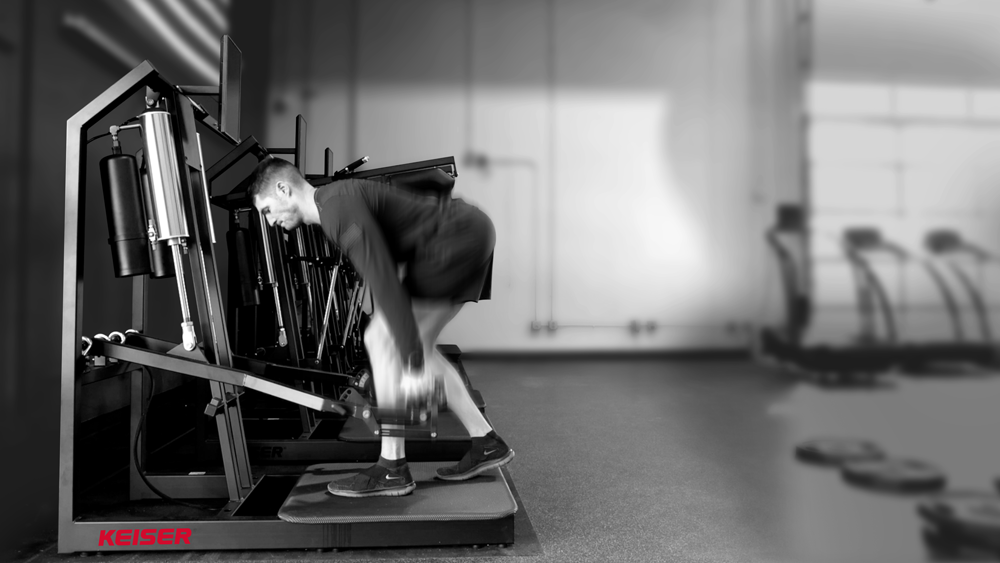
Improving Deadlift Mechanics With Low-Inertia Resistance

A smoother start, stronger finish, and more control through the full hinge.
The deadlift sits in an unusual place in strength training. Plenty of coaches avoid it, yet others rely on it to build resilient, high-output athletes. The difference often comes down to logistics and risk: plate changes, fatigue management, and the surge of force required to start the bar from the floor.
Keiser technology shifts that equation. When resistance moves without mass or momentum, the deadlift becomes a more controlled way to train strength, speed, and intent.
The Practical Challenges of Traditional Deadlifting
The Practical Challenges of Traditional Deadlifting
Load changes slow everything down
Plate swapping disrupts group flow. With twenty or thirty athletes rotating through warm-up sets, the pace of the room drops fast.
The bottom of the lift is where most problems start
The first inch of the pull places athletes at a mechanical disadvantage. They must overcome inertia right when the spine has the least support.
Momentum takes over the top of the range
Once the bar is moving, momentum carries it. That reduces muscular work in the final 90% of the motion — the part where athletes are mechanically strongest.
Speed work becomes risky
Loaded jumps and fast eccentrics matter in sport, but they’re hard to load safely with iron. The bar can move faster than the athlete can control.
These challenges are simply the cost of moving mass against gravity. Many coaches who rely on deadlifting can appreciate a way to load the hinge without these limits.
Why the Deadlift Pattern Still Matters
The hinge shows up everywhere: picking up bags, landing from jumps, bracing on contact, and carrying load.
It reinforces:-
Lower-body strength
-
Trunk stability
-
Hip-dominant control
-
Grip and upper-back involvement
-
Confidence under load
Whether the goal is force production, balance, or independence, the pattern remains a valuable part of training.
How Keiser Technology Changes the Deadlift
Keiser removes unnecessary mass from linkages and moving parts and uses pneumatic resistance to keep inertia low. The result is Pure Resistance Technology: loading that responds to the athlete, not the other way around.
Keiser’s low-inertia system changes how athletes interact with the hinge. When the resistance follows the athlete — instead of dragging or carrying them — coaches gain more control over how force, speed, and intent show up.
Smoother start
Athletes don’t fight a surge of force at the bottom. They can hold posture and stay consistent through fatigue.
More work at the top
Instead of coasting through momentum, athletes stay engaged through the full range—especially where they’re strongest.
Faster, cleaner load changes
Touch-button adjustments keep groups moving. Athletes stay focused, and coaches maintain session rhythm.
Speed becomes safer
Loaded jumps, pogos, drop catches, and quick hinges stay athlete-driven rather than bar-driven.
Acceleration without risk
Athletes can move fast without throwing mass or catching it on the way down.
Less joint stress
No whipping, no jarring, no momentum spikes. Training stays focused on position and intent.
Low inertia changes the way coaches can use the deadlift.
Versatility That Extends the Deadlift
This machine isn’t limited to one movement. Its value shows up in how many ways coaches can build around the hinge pattern — especially drills that aren’t realistic with mass.
1. Dynamic Hinge-Based Movements
These require quick movement without being dragged forward or downward by the load.
-
Loaded jumps — vertical force without a bar on the spine
-
Alternating + single-leg pogos — rhythm, stiffness, and timing
-
Drop catches + fast eccentrics — controlled rapid hinge work
These are the movements coaches usually can’t program safely with plates.
2. Hinge Variations for Strength and Control
Variations that stay stable because the load doesn’t drift.
-
Single-leg RDL
-
Stagger-stance RDL
-
Suitcase hinges
-
Straight-leg and oscillating calf work
These progressions fit naturally into return-to-sport, field-sport prep, and off-season hinge development.
Working With Late-Stage Rehab or Reconditioning?
Here’s how clinicians use low-inertia hinge training to progress patients safely.
Explore Medical ApplicationsOne Station, Many Uses
Athletes can also perform bent-over rows and single-arm rows without fighting the bar path. That makes it easy to pair hinge and pull patterns without moving across the room.
Where This Fits in Modern Performance Programming
The Keiser deadlift machine can fill a specific role for programs that need controlled hinge work, fast adjustments, or dynamic pulling options.
-
Heavy pull days
Big athletes can train the hinge without the abrupt spike of force at the bottom.
-
Velocity or intent-driven training
The A300 offers quick power feedback.
The A400 adds velocity, ROM, and performance drop-off data for in-session decisions. -
Late-stage return-to-sport
Micro-loading and smoother starts help clinicians reintroduce hinge work safely. -
Large-group environments
Touch-button resistance keeps sessions moving and reduces downtime between sets.
For Units Focused on Readiness, Durability, and Daily Throughput
Here’s how the Deadlift fits tactical demands — from Ft. Bragg to major fire departments.
Explore Tactical Applications
Facilities that need more from each station
When space is tight, having hinge, speed, and upper-body pulling options in one footprint adds real value.
Managing Member Volume or Multiple Programs on One Floor?
See how versatile hinge training supports commercial facilities of every size.
Explore Commercial Applications
These are the contexts where the machine earns its role. The Keiser Deadlift expands what coaches can accomplish in the hinge pattern.
A300 vs. A400: Which Fits Your Coaching Style?
Both machines share the same platform and low-inertia system. The difference is how each one guides intent.
A300 — Fast, simple intent feedback
Peak power and percentage-of-peak keep athletes honest rep to rep.
Ideal for high-flow rooms and quick coaching cues.
A400 — Data for coaches who program with numbers
Velocity, ROM, power, performance drop-offs, and rep history support testing, profiling, and velocity-based training.
Which to choose?
-
Want quick feedback and simplicity? → A300
-
Want deeper analysis and velocity-driven programming? → A400
Both support the same movement library. The difference is the coach behind the screen.
Want a Clearer Comparison of What Each Display Can Do?
Here’s a breakdown of A300 vs. A400 capabilities so you can see the differences at a glance.
Explore Display Options
The Deadlift Still Matters for the Coaches Who Use It
The deadlift isn’t for everyone — but when it belongs in a program, it belongs for a reason. It builds strength, control, and confidence in a pattern athletes use every day.
A low-inertia system doesn’t change the deadlift itself. It changes how coaches load it: smoother starts, fuller ranges, safer speed work, and more ways to build the hinge.
This machine wasn’t created to reinvent the lift. It was built for coaches who still believe in it — and want more control over how their athletes train it.