11 min read
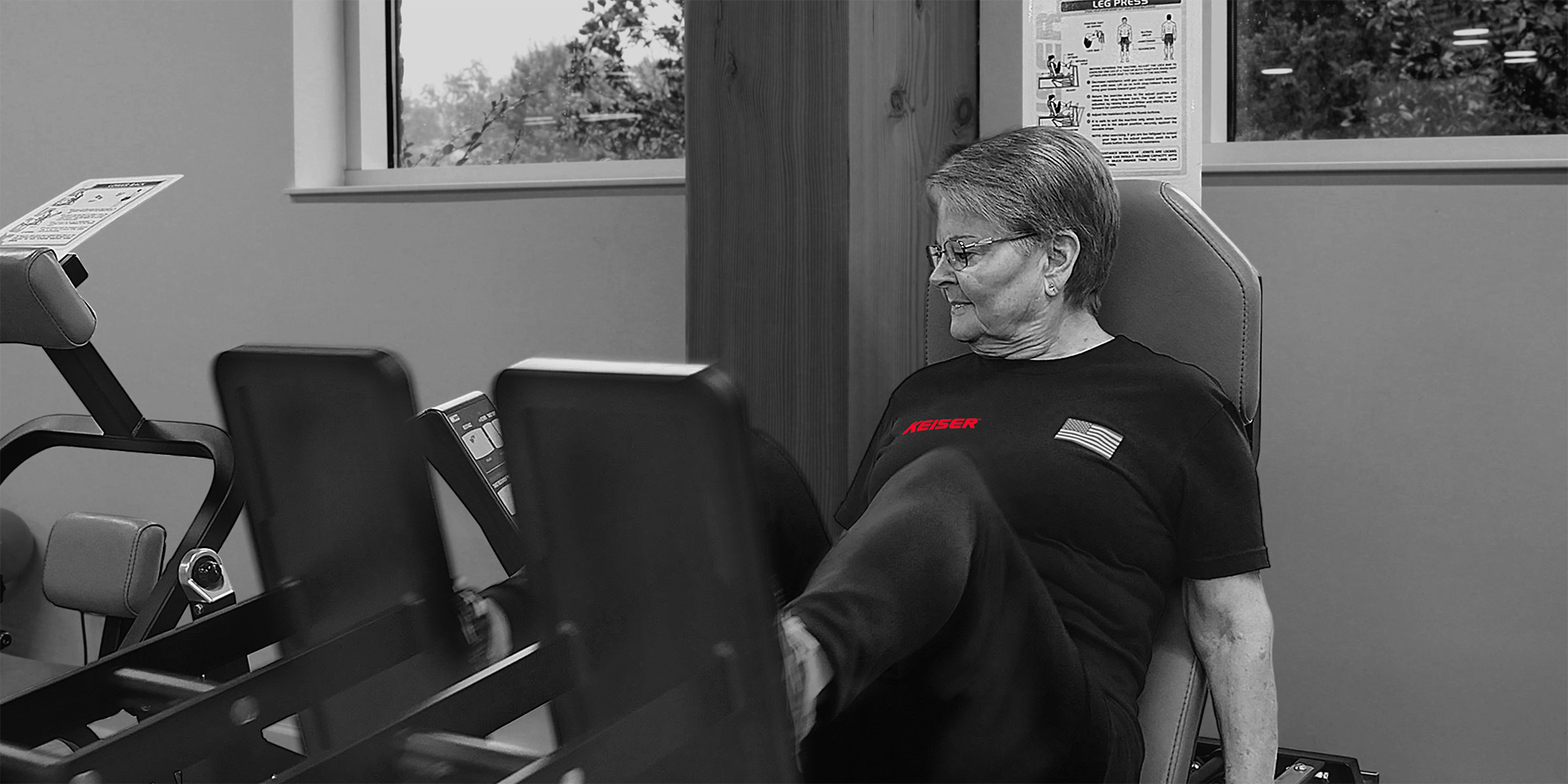

Notes from the 2026 Powerpenia Conference on power as a biomarker, the reserve capacity behind everyday tasks, and the researchers building the case.
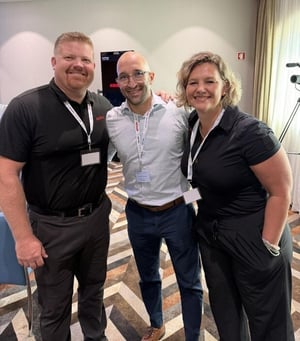 This July, I had one of those moments in a profession where you realize you're part of a movement that will bring immense positive change to the future.
Researchers, clinicians, physiologists, and practitioners from around the world gathered for the Keiser-sponsored 2026 Powerpenia Conference to give a name to an idea that has quietly been building for years. [1,2,5] The term powerpenia may be unfamiliar today, but if the discussions in Lisbon are any indication, it won't remain that way for long.
For decades, the conversation surrounding aging has focused largely on strength and maintaining muscle mass. [1,2] We have measured strength, prescribed resistance training, and celebrated its role in maintaining independence. Yet throughout the conference, one message emerged again and again: strength matters, but power may matter even more. [5]
From a Seminar in Brazil to Forty+ Speakers in Lisbon
The Powerpenia Conference started as a small seminar in Brazil. This year it brought more than forty invited speakers to Lisbon from universities, hospitals, and research centers around the world, representing medicine, exercise physiology, biomechanics, rehabilitation, and strength and conditioning.
The breadth of expertise was striking. One session examined the molecular mechanisms associated with declining neuromuscular function, while another explored practical strategies for improving power production in community-dwelling older adults.
Researchers discussed muscle architecture, tendon behavior, resistance training, clinical screening, and public health initiatives, all through the common lens of preserving movement capacity throughout the lifespan. Despite the diversity of topics, nearly every presentation seemed to approach the same fundamental question from a different perspective: How do we help people continue doing the things they love for as long as possible?
Independence is a Velocity Problem
One of the conference's central themes challenged a long-held assumption in exercise science. Traditionally, the loss of muscle mass associated with sarcopenia has received considerable attention as a driver of age-related functional decline. [2] While maintaining muscle mass remains important, presenters repeatedly highlighted evidence that declines in muscle power can occur earlier and progress more rapidly, and that power may have a particularly strong relationship with the physical tasks that determine independence. [6]
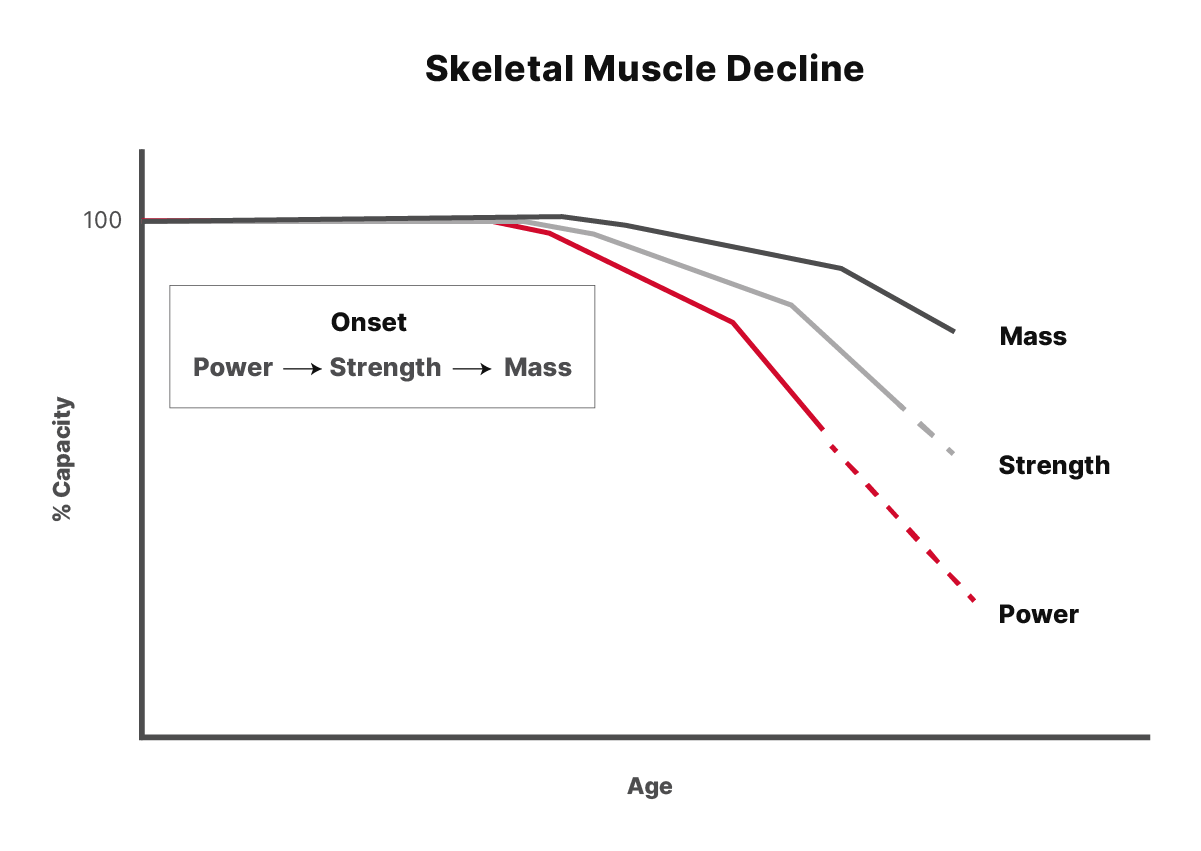
Those tasks rarely require maximal strength. Instead, they require the ability to generate force quickly and effectively. Standing up from a chair, recovering from a trip, climbing stairs, crossing a busy intersection before the signal changes, or catching yourself after slipping on wet pavement all place a premium on how rapidly force can be generated. In these situations, the amount of force someone can eventually produce may be less important than whether they can produce force quickly enough to meet the demands of the moment.
In other words, independence is often a velocity-dependent problem.
Sarcopenia & Dynapenia vs. Powerpenia
Elite Sport and Everyday Life Sit on One Continuum
 One of the most enjoyable moments of the trip came after the conference sessions had ended for the day, when several attendees gathered to watch Portugal face Croatia in the World Cup. As the crowd erupted with every explosive sprint, sudden stop, and rapid change of direction, I found myself thinking back to the presentations from earlier that afternoon. The qualities being discussed in lecture halls and research presentations were being demonstrated in real time on the field. And sitting in the middle of 40 passionate Portuguese supporters while proudly wearing a Croatia jersey proved to be its own high-stakes experiment in self-preservation.
Elite athletes provide an obvious example of the importance of power and rapid force production. Every acceleration depends on the ability to subsequently decelerate. Every successful change of direction requires the athlete to generate and control force quickly. Every recovery step after losing balance depends on producing enough force, in enough time, to remain upright. The difference is one of context and consequence. For a professional footballer, those qualities help determine competitive success. For an older adult, similar physical capabilities may determine whether a stumble becomes a fall.
That was one of the most interesting connections I took away from the trip. Human performance exists along a continuum. The same physiological qualities that allow an elite athlete to sprint, cut, and recover at the highest level also influence how each of us moves through everyday life. The stakes may be different, but the underlying need to produce and control force quickly does not disappear.
Five Ideas That Reframe Healthy Aging
What made the Powerpenia Conference different was how consistently the presentations pointed toward several broader ideas. By the end of the conference, five themes stood out:
1. Muscle power is a critical measure of function.
Power may decline earlier and more rapidly than maximal strength, making it a potentially sensitive indicator of functional decline. Because everyday activities such as rising from a chair, climbing stairs, or recovering from a trip require rapid force production, power may provide an important complement to traditional measures of strength and muscle mass.
2. Healthy aging is about more than preserving muscle mass.
Muscle quality, neuromuscular function, tendon behavior, and movement velocity all contribute to physical capacity. Maintaining strength and muscle mass remains important, but preserving the ability to react, recover, stabilize, and move quickly may be equally important to maintaining independence.
3. Early intervention may be the greatest opportunity.
Functional decline can begin long before disability becomes apparent. Identifying changes in power while individuals remain active and independent may provide a valuable window for intervention and reinforce the need for practical, accessible methods of assessing power.
4. The future depends on collaboration.
Researchers, clinicians, biomechanists, rehabilitation specialists, and strength professionals each bring a different perspective to healthy aging. Powerpenia is too complex for any single discipline or training method to address, making collaboration essential to translating emerging research into practical applications.
5. The conversation is shifting from prevention to performance.
Successful aging goes beyond avoiding disability to preserving the capacity to participate in the activities that make life meaningful. That means thinking beyond traditional measures and asking whether people can continue to travel, climb stairs, recover from a loss of balance, get up from the floor, and participate in the activities they enjoy.
Six Routes to the Same Decline
What made the conference particularly compelling was the range of disciplines contributing to the powerpenia conversation. Researchers are approaching it from different directions—neuromuscular mechanics, clinical rehabilitation, muscle architecture, exercise physiology, and real-world physical function—and those perspectives are beginning to converge.
Sandro R. Freitas: Establishing Power as a Meaningful Biomarker
As the host of the conference and one of the original four champions of the powerpenia framework, Dr. Sandro R. Freitas provided an important foundation for the discussion. His work examines neuromuscular mechanics and the relationship between muscle function and meaningful changes in physical performance. [4,5] Rather than viewing muscle mass as the sole indicator of age-related decline, Freitas and his collaborators have emphasized the importance of measuring how effectively the neuromuscular system can produce power.
Freitas' broader message was that power may provide a more sensitive window into early neuromuscular decline than traditional measures alone. If an individual can maintain a reasonable amount of muscle mass and even preserve much of their maximal strength while losing the ability to generate force rapidly, relying exclusively on those traditional measures may cause us to miss an important part of the picture. That is one of the central ideas behind powerpenia: the quality of force production matters, not only the quantity of muscle or maximal force available.
Why Power Matters More as We Age
Dr. Sandro Freitas explains why preserving muscular power is critical to function and independence as we age.
LISTEN TO THE PODCAST
Carlos Cruz-Montecinos: Measuring the Reserve to Perform
Dr. Carlos Cruz-Montecinos is also one of the original four researchers to propose powerpenia as a biomarker. He offered an especially interesting clinical perspective on the concept of power reserve. His work focuses on the interaction between the muscle-tendon unit and functional performance in clinical populations, including individuals living with hemophilic arthropathy and chronic joint impairment.
One way to think about this is to consider the difference between what a person can produce and what everyday life requires them to produce. An individual may be capable of generating enough force to complete a movement under controlled conditions, but if that movement requires nearly all of their available capacity, there is little reserve left when the environment becomes unpredictable. A stumble, a change in direction, an unexpected step, or simply a more demanding version of a familiar task can expose that limited reserve.
This concept gives power assessment a practical clinical context. Rather than asking whether someone can complete a task, we can begin asking how much capacity they have available relative to the demands of that task. Cruz-Montecinos' work, including research demonstrating the usefulness of 30-second sit-to-stand power in detecting motor impairment, illustrates how functional power testing may provide information that traditional isometric or range-of-motion measures do not capture on their own. [3,4,5]
Geoff Power: Understanding What Happens Inside the Muscle
While Freitas and Cruz-Montecinos helped frame power as a functional and clinical measure, Dr. Geoff Power provided a fascinating look at the underlying muscle mechanics.
Power's research examines how muscle structure and mechanical history influence function, including the role of eccentric contractions in stimulating structural adaptations within muscle. [6,7,10,11] One area of particular interest is sarcomerogenesis—the addition of sarcomeres in series along a muscle fiber. These structural changes can influence muscle fascicle length and, consequently, the mechanical characteristics of the muscle.
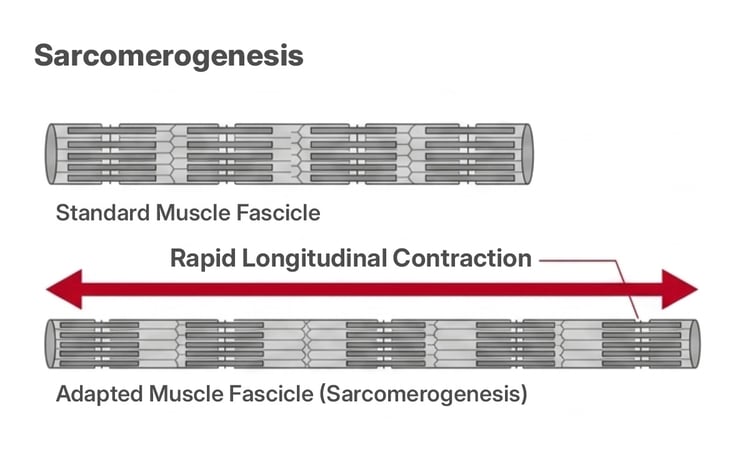
This becomes particularly relevant when considering the age-related decline in power. Power is more than a matter of how much muscle someone has. The structure of that muscle influences how effectively it can produce force and how quickly it can shorten. Age-related changes in muscle architecture may therefore contribute to the reduction in movement velocity that characterizes power loss.
For those of us working with resistance training, this reinforces the importance of thinking beyond a "heavier is better" model. The type of mechanical stimulus, the way force is produced, and the range of contraction characteristics all influence the adaptations we are trying to create.
Evelien Van Roie: Closing the Gap Between Capacity and Daily Life
Dr. Evelien Van Roie's work brought another critical piece of the puzzle into focus: what happens outside the laboratory? [8,14]
It is possible to demonstrate impressive physical capacity during a structured assessment without necessarily translating that capacity into everyday behavior. Van Roie's research has explored the relationship between physical activity and an individual's functional capacity, highlighting the importance of understanding how much of a person's available capacity is actually challenged during normal daily life. The most intriguing part of her talk to me was that her her lab runs its leg power testing on the Keiser A400 Leg Press.
This creates an important distinction between capacity and performance. A person may possess a certain level of physical capability, but if their daily activities rarely challenge that capability, the gap between what they can do and what they routinely do may continue to grow. Conversely, individuals who regularly operate closer to their available functional capacity may provide their neuromuscular system with a greater stimulus to maintain that capacity.
Van Roie's work has meaningful implications for velocity-based training. High-velocity resistance training provides a way to deliberately challenge the ability to produce force rapidly, potentially helping preserve a quality that is particularly important as people age. It can improve what someone can do in a laboratory or gym and help preserve the physical capacity needed to meet the demands of everyday life.
Ratel and Tanaka: Lifespan Development and Cardiovascular Limits
Other presentations broadened the conversation even further. We heard from another of the original four powerpenia cofounders, Sébastien Ratel. His work examining muscle power across the lifespan highlighted the importance of understanding how neuromuscular function changes from childhood through older adulthood. [4,5,9,12] Ratel’s research points toward the importance of high-threshold motor units and rate of force development. He reinforced the idea that maintaining the ability to produce high levels of force slowly may not be enough to preserve power across the lifespan.
Hirofumi Tanaka added an important cardiovascular perspective. His work examines vascular aging, central blood pressure, arterial stiffness, and the hemodynamic responses associated with different forms of exercise. [5,13] That perspective is particularly relevant because any discussion of power training in older adults has to consider more than the muscular system in isolation. When considering higher-velocity exercise we must understand how it can be appropriately prescribed within the broader context of cardiovascular health and individual risk.
Together, these presentations illustrated why the powerpenia conversation is so interesting. It goes beyond an argument for adding "power training" to an exercise program. It is an attempt to better understand the interconnected changes in muscle, nervous system function, connective tissue, cardiovascular health, and behavior that ultimately determine how well someone moves through life.
Intervening Before Mobility Is Lost
Sitting through those sessions, I kept recognizing the principle our STEP system was built around. STEP was designed for older adult communities on the premise that preserving speed and movement quality matters as much as preserving strength when it comes to healthspan. The Lisbon sessions felt like a powerful validation of the framework we've built.
Traditional iron weight stacks introduce inertia and momentum. This makes fast and powerful movements challenging for an older adult. Keiser's low-inertia, pneumatic resistance technology has very little mass to accelerate, which is what makes higher-velocity training practical for this population.
THE POWERPENIA CONVERSATION CONTINUES
The Keiser Community is where coaches, clinicians, and performance staff work through the research behind decisions like these..
LEARN MORE
As the conference came to a close, I found myself reflecting on just how much the conversation around healthy aging has evolved. For years, we have celebrated increases in strength as markers of success, and that isn't changing—and it shouldn't. Strength remains one of the most important physical qualities we can develop throughout life. What this conference made clear, however, is that the conversation is becoming more complete. The ability to produce force quickly—the quality we describe as power—is increasingly being recognized as an important determinant of how people move, recover, and maintain their independence.
 If the emerging concept of powerpenia helps clinicians identify declining function earlier and intervene sooner, it has the potential to reshape how we approach healthy aging. Rather than waiting until mobility has already been lost, we can begin asking a different question: How do we preserve the ability to move well before independence begins to decline?
That question feels remarkably aligned with Keiser's mission. For decades, Keiser has emphasized training for movement, speed, and power. Because those qualities improve athletic performance and influence how people function throughout every stage of life. Whether working with elite athletes, individuals recovering from injury, or older adults striving to remain active, the objective is fundamentally the same: help people continue doing what they love for as long as possible.
Walking through the streets of Lisbon after the final session, I reflected on the value of this conference. It was giving researchers, clinicians, and practitioners a common language for something many had observed independently for years. Power can decline long before people recognize a meaningful change in their physical abilities. Functional limitations can begin to develop before disability becomes obvious. If we can identify those changes earlier and respond with effective, evidence-based interventions, we have an opportunity to influence how long and how well people live.
That, to me, is what made the 2026 Powerpenia Conference so memorable. It felt like the beginning of a new chapter in how we think about human performance across the lifespan. I'm grateful to the conference organizers, presenters, and attendees for creating an environment where ideas could be shared openly, challenged thoughtfully, and explored collaboratively. The discussions in Lisbon will undoubtedly influence future research. They also reinforced something that has guided our work at Keiser for decades: when we help people move with greater confidence, speed, and purpose, we help them live fuller, more independent lives.